An army of concretions in the Trabuc Caves in southern France is one of our planet’s most fascinating geological oddities.

The world has countless breathtaking caves, but the Trabuc Caves possess a distinctiveness that sets them apart. Within these captivating caves, known for their breathtaking beauty, lies a geological phenomenon of great intrigue that was named the “100,000 Soldiers” by the first explorers that had a chance to set their eyes on it.
Amidst the remarkable expanse of the caves, which boast the largest network of underground passages in France’s Cévennes region, this multitude of peculiarly compact concretions gathered closely together in a confined space indeed resemble a massive assembly of motionless soldier figurines.

Grottes de TRABUCScattered across the cave floor, the diminutive “soldiers” stand merely a few centimeters tall, and their presence remains exclusive to this particular location, meaning they haven’t been discovered anywhere else in the world.
These enigmatic mineral masses form beneath the water’s surface and consist of 95 percent calcite and 5 percent clay. They all take on the appearance of overlapping discs, potentially due by fluctuating water levels.
And that’s about all we know about how they came into existence.
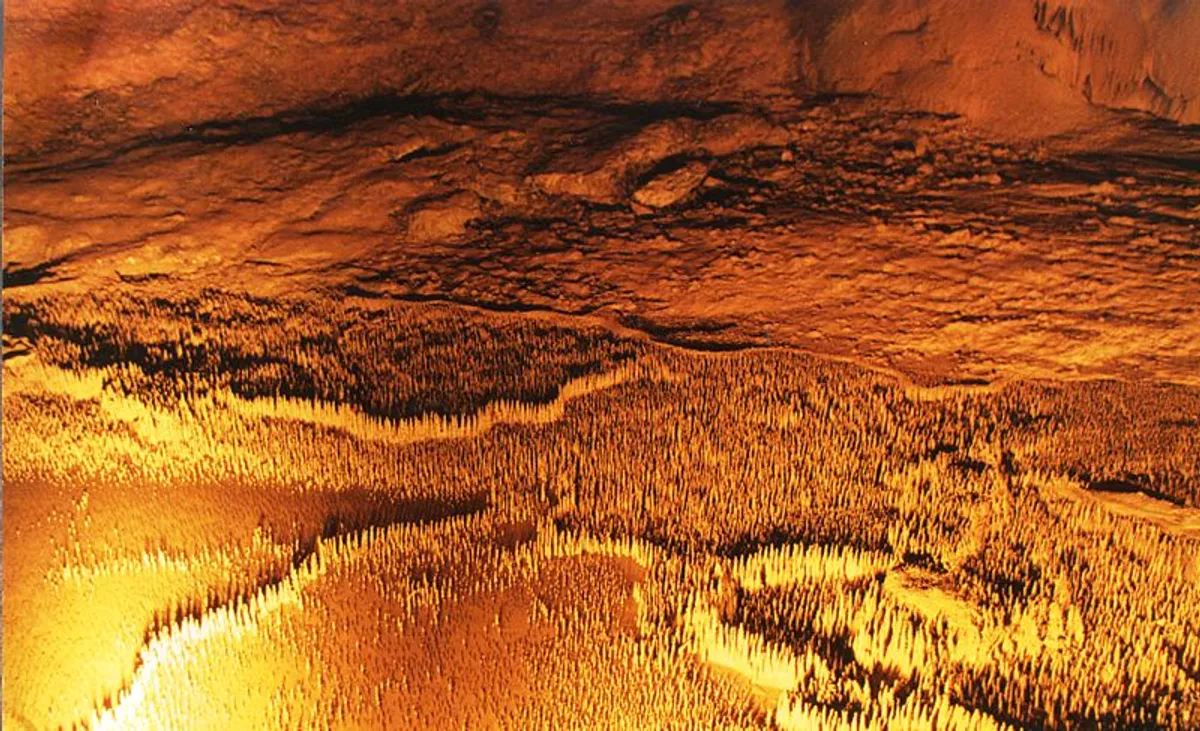
Stalagmites, which grow on the ground, and stalactites, which hang from the ceiling, are usually found in pairs inside caves. Stalactites are formed as water drips from above, and when they subsequently fall to the ground they give rise to stalagmites. However, the unique phenomenon of the 100,000 Soldiers deviates from this pattern as there are no stalactites above. Instead, the cave floor is covered by an expanse of concretions.
Scientists have proposed various theories over the years in an attempt to elucidate this geological anomaly, but none have successfully provided a satisfactory explanation. Consequently, the origin of the 100,000 Soldiers remains a mystery, continuing to puzzle researchers to this very day.
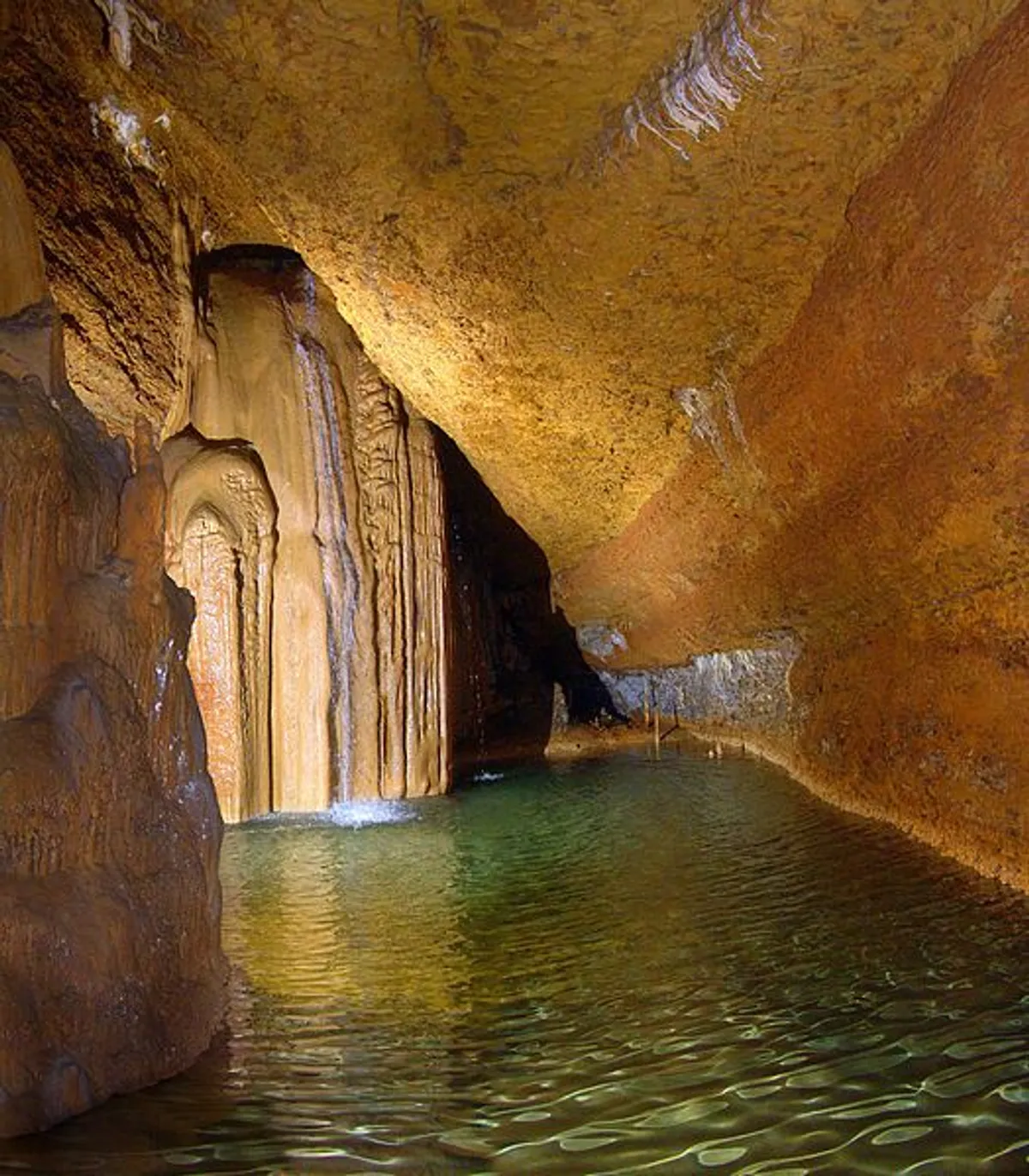
The magnificence of the Trabuc Caves extends beyond the presence of the 100,000 Soldiers. Within this intricate network, one can marvel at a vibrant array of minerals, cascading waterfalls, and serene pools, all intertwined with a fascinating and extensive history.
These caves have been known and utilized since ancient times, although it wasn’t until the 1950s that the construction of an artificial tunnel provided convenient access to the cavern.

Throughout history, the underground tunnels of Trabuc served as a shelter for different groups, such as smugglers during the Middle Ages, the Huguenots amidst the religious conflicts of the 18th century, and “trabucaïres”, or highwaymen, from whom they get their name. Scientific exploration of the caves commenced in 1823. Presently, approximately six miles of these caves have been explored, but speleologists anticipate that the subterranean network spans two to three times that size, owing to the incredible labyrinthine nature of the limestone rock formations found here.
 Donate


Related Posts
Meet Lanmaoa asiatica: The Mushroom That Can Make You See Little People
The Road to Heaven: China’s Tianmen Mountain Big Gate Road Might Be the Craziest Drive on Earth
Nördlingen, the Medieval German Town Built from Diamonds in a Meteorite Crater
Island in Lake on Island in Lake on Island in Lake: This Is the World’s Only 5th Order Recursive Island
500 Days in Darkness: The Long-Buried Story of Priest’s Grotto, a Holocaust Refuge in One of the World’s Longest Caves
Kutkhiny Baty: The Place That Nature Made to Look Unnatural
The Old Man of Hoy: How Scotland’s Towering Sea Stack Lost a Leg and May Soon Fall
Baby Stingrays Look Like Aliens Stuck in Ravioli — And That’s Not Even the Most Interesting Thing About Them
Aliens, Oilbirds, Magyars, a Golden Library, and Neil Armstrong: Inside the Mystery of Ecuador’s Cueva de los Tayos
La Rinconada, Peru: The World’s Highest Town — and One of Its Most Lawless