The perception of beauty in the Bodi tribe might be a bit different than what we’re used to, but it’s a great example of the amazing cultural diversity one can experience around the world.

These remarkable people live in the Omo Valley in southwest Ethiopia. As an agricultural tribe, the Bodi make a living from herding livestock, and cultivating different plants along the banks of the Omo River.
What they are most known for, though, is the annual celebration of the Bodi lunar new year, the Ka’el ceremony. It takes place around June, four days after the first moon of the month. The new year ceremony is also a competition for unmarried men, who have to put on a bit of extra weight, to be crowned winners.

Each family or clan can present a contestant they deem fit for the competition. However, competing for glory in the Bodi tribe is a huge challenge. To become the fattest man, competitors have to prepare for 6 months. During this time, they cannot be seen outside of their huts, and they have to drink an insane amount of cows blood and milk mixture.
Since cows are considered sacred animals for the Bodi, they are not killed. They just take the blood by making a small hole in a vein, which they later close with clay.

The isolation, lack of exercise, and the mixture of blood and milk helps the men to fatten up as much as they can in 6 months. They drink the first 2 liters at sunrise, and they continue to consume it throughout the day. Moreover, because of the hot temperatures, contestants have to chug the mixture before it coagulates. But it’s not that easy to consume huge bowls of blood and milk: many of the men vomit it, because they just can’t drink it at such a speed.
Once the time comes for the ceremony, the men cover themselves with clay and ash, and emerge from their huts. Their traditional dress code for the Ka’el ceremony also includes headdresses made from shells and plumes, beaded necklaces, and bracelets.
“The ceremony always takes place in 4 different Bodi villages. Each village has their own tribal leader, to celebrate their Ka’el ceremony. The initial ceremony takes place at Hanna village; other 2 occur in Gura village; and the last one happens at Kulo village” Fitretu Getachew, local guide and photographer, told Earthly Mission.
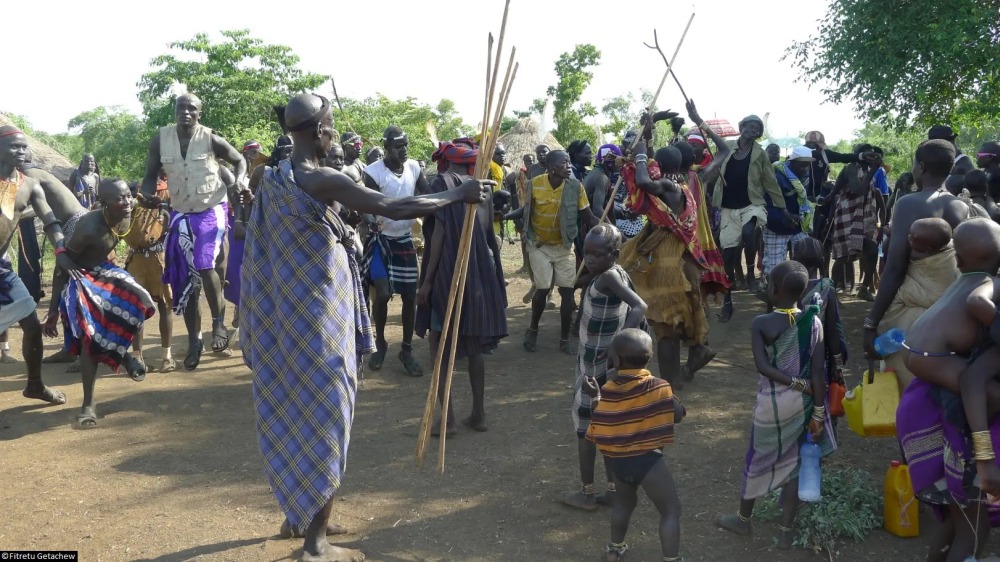
When the contestants are ready, they start walking to a sacred tree, where the Ka’el takes place. While the 6 months-long preparation for the competition is tough, some Bodi men find the walk, and the ceremony itself harder. Luckily, the women are around to help out the overweight contestants with water, and some alcohol.
As part of the ceremony, the fat men start to run in a circle around the sacred tree, while their judges are watching them. Since the overweight men are running in the scorching sun for hours, they regularly need breaks during the ceremony.
“The ceremony is also accompanied by warm music, and dancing” said Fitretu.
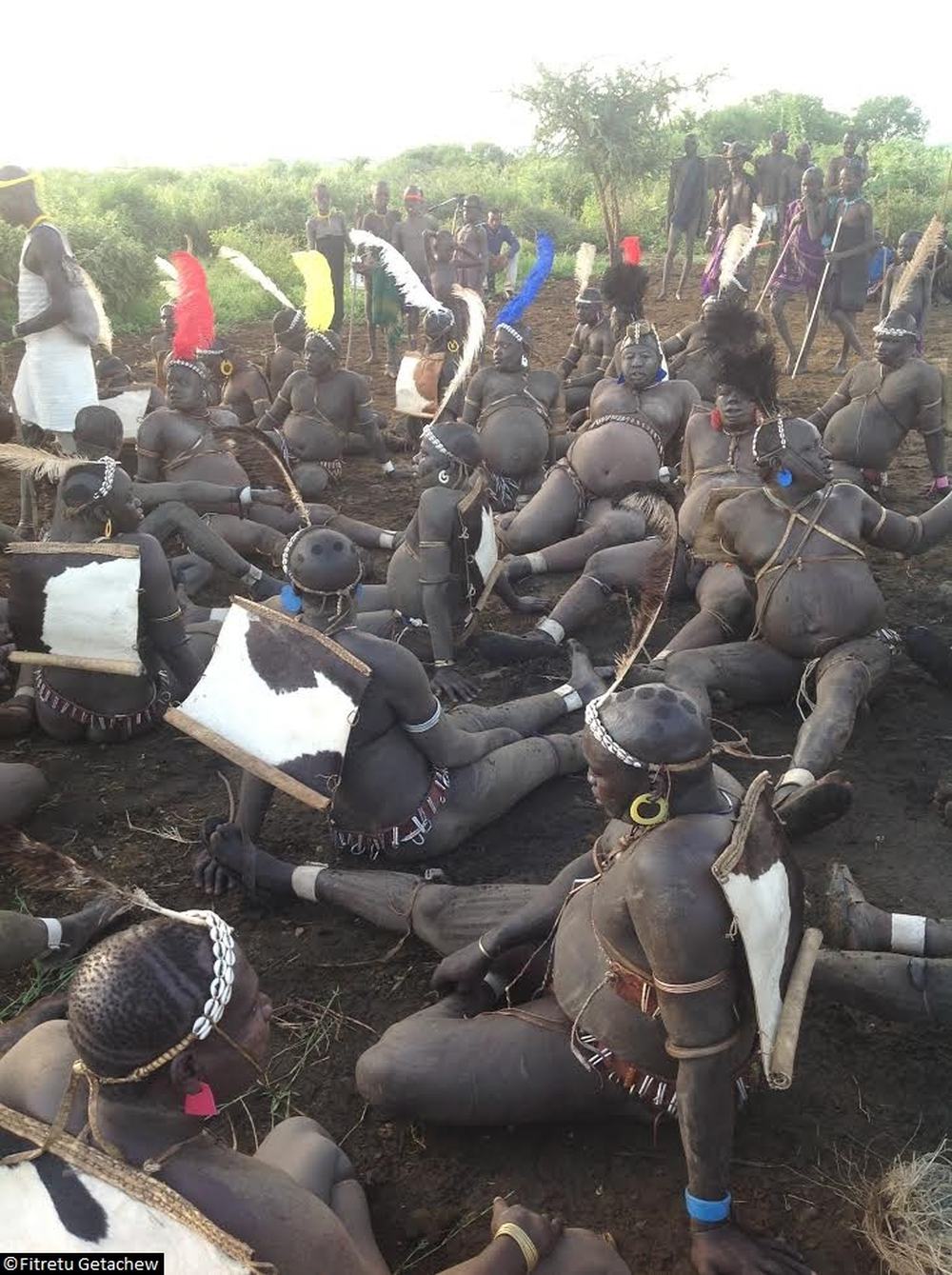
The Bodi women, who are present not only to help the men through the rough parts of the ceremony, but to also show off in their prettiest clothes, and to inspect the potential husband materials.
After hours of running and dancing, the bodies of the contestants are measured by the elderly judges, who then declare the winner of the competition. The Bodi man who gets chosen as the winner of the Ka’el ceremony is awarded great fame, and will be celebrated as a hero. No wonder why becoming ‘fat man of the year’ is the dream of every Bodi child.
The Ka’el ceremony ends with the sacrifice of one of their sacred cows. The elders of the given village then use the intestines to predict if the future will be good or bad.
When the lives of the contestants return to normal, and they begin eating foods other than blood and milk, most of them lose their bellies after just a few weeks. Shortly, however, participants in next year’s Ka’el ceremony start their preparations to become the future hero of the tribe.
 Donate


Related Posts
The Python-Hunting Anarchists Who Resisted Spanish Rule: The Aeta of the Philippines
Rare Footage Shows World’s Largest Uncontacted Tribe in Peruvian Amazon Driven From Forest by Logging
The Korowai People in Indonesia Live in Tree Houses That Can Be Up to 45 Meters High
Mali’s Dogon People Have Long Had Knowledge About the Sirius Star System Only Recently Confirmed by Science
A Challenging Encounter: Making First Contact With the Extremely Reclusive and Hostile Tribe of North Sentinel Island
The Ostrich Tribe of Zimbabwe Has a Two-Toed Population Due to a Rare Genetic Condition Which They Use to Their Advantage
Meet the the Tallest People in Africa, And Probably the Entire World: The Dinka of South Sudan
“Loneliest Man in the World” Dies, Taking His Language and Culture With Him
Extremely Militant Uncontacted Tribe Spotted in The Amazon – These May Be Their Last Hours
Man-Made Monument or Natural Phenomenon? Sacred Face of the Harakbut Declared Cultural Heritage of Peru