
In Germany, it is not uncommon to decorate trees during the holiday season. The Christmas tree tradition, as it is currently known, is believed to have originated in the 16th century when devout German Christians began bringing decorated trees into their homes. And there’s a similar custom at Easter, too.
The “Easter Tree” or “Osterbaum” in German, is a small tree or branch that is decorated with Easter eggs, ribbons, and other ornaments. This tradition is most common in the eastern part of Germany, particularly in the regions of Thuringia and Saxony, and is believed to have originated from a pagan springtime ritual of hanging painted eggs on branches to symbolize new life and fertility.
Christa and Volker Kraft, along with their family, took the Osterbaum tradition very seriously and went to great lengths to adorn a tree in their garden in Saalfeld, Germany with over 10,000 eggs. Unfortunately, however, 2015 marked the end of these Easter decorations in the family, and the garden where the Easter tree was displayed was permanently closed from April 7th of that year.
It took the Kraft family around two weeks to hang all 10,000 eggs

They started the family tradition in 1965 with 18 Eastern eggs

In 1994, there were 350 Easter eggs on the tree

The number slowly went up to 10,000…
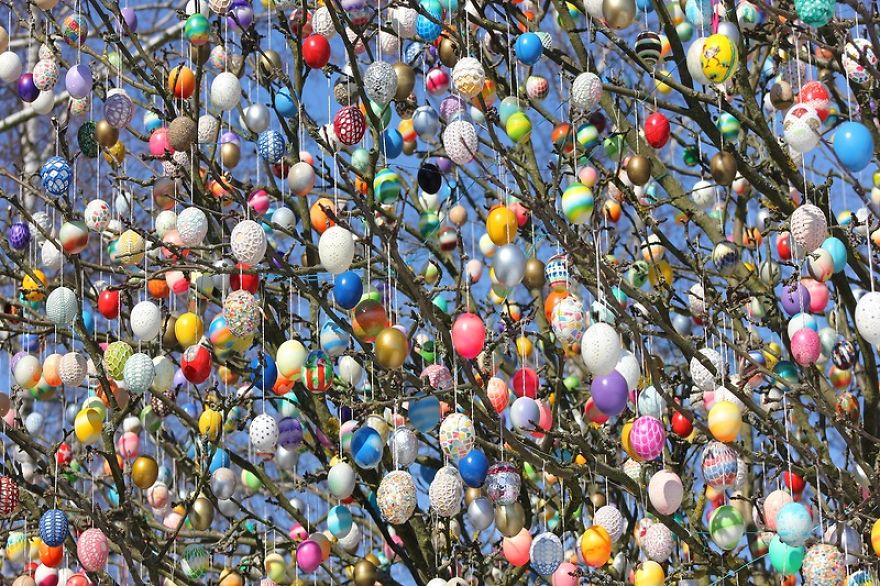
They started with plastic eggs, but later switched to real eggs

The tree has become a tourist attraction, drawing thousands of people every year until the family decided to discontinue the tradition

 Donate


Related Posts
Nördlingen, the Medieval German Town Built from Diamonds in a Meteorite Crater
Kreidesee: The Former Quarry Turned Into a Divers’ Paradise With All the Equipment Still Visible
Asia’s Tallest Tree Discovered in World’s Deepest Canyon in Tibet
The Largest Cashew Tree in the World is 1,000 Years Old and Covers an Area of About 8,000 Square Meters
This Sacred Tree at Takeo Shrine in Japan Is Estimated to Be 3,000 Years Old
The Llangernyw Yew Could Be the Oldest Tree in Europe and Looks Like a Portal to the Afterlife
This Tree in Mexico Has the Thickest Trunk in the World, Supporting a Crown the Size of Almost Two Tennis Courts
This Olive Tree in Greece is Considered the Oldest in the World With an Estimated Age of 4,000 years
Librarian Gives New Life to 110-Year-Old Tree Stump By Turning It Into Free Community Library
This Bonsai Tree Is Almost 400 Years Old and Has Even Survived the Hiroshima Bombing