Honeyguides have an ancient relationship with humans. In fact, these birds can even understand and work together with people for a common goal.
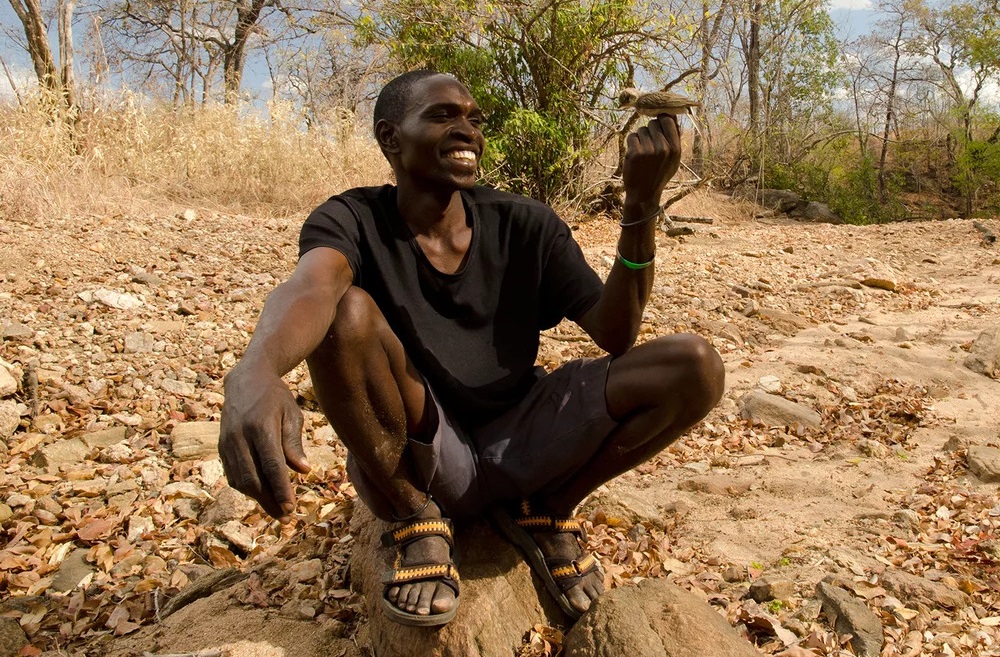
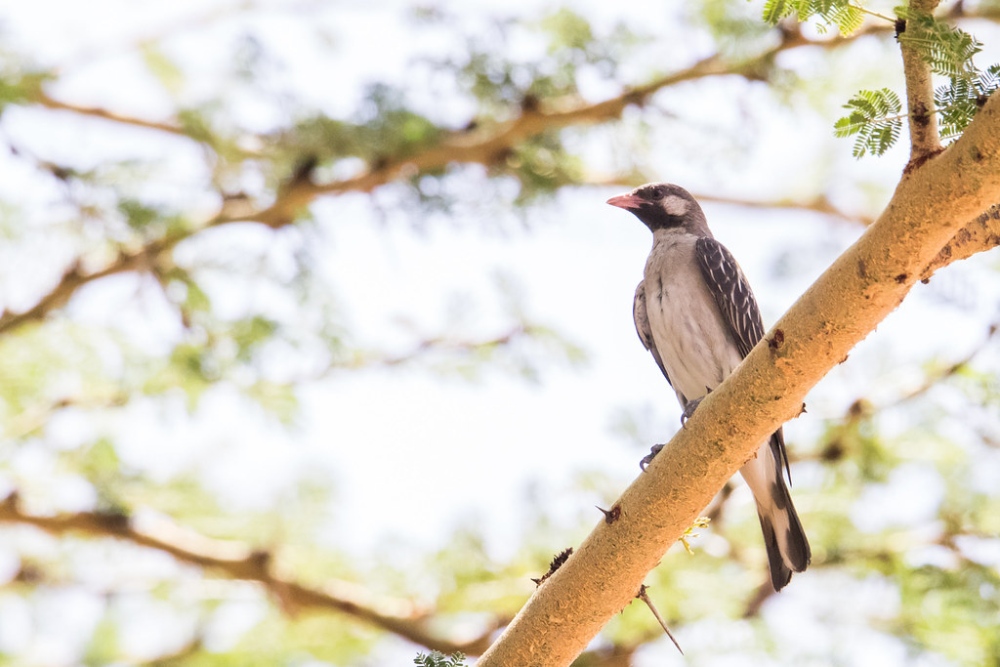
In the wooded savannas of southern Africa, an extraordinary partnership exists between people and the greater honeyguide (Indicator indicator). Namely, the bird shows local honey hunters where the honey is, in return for… Well, read on.
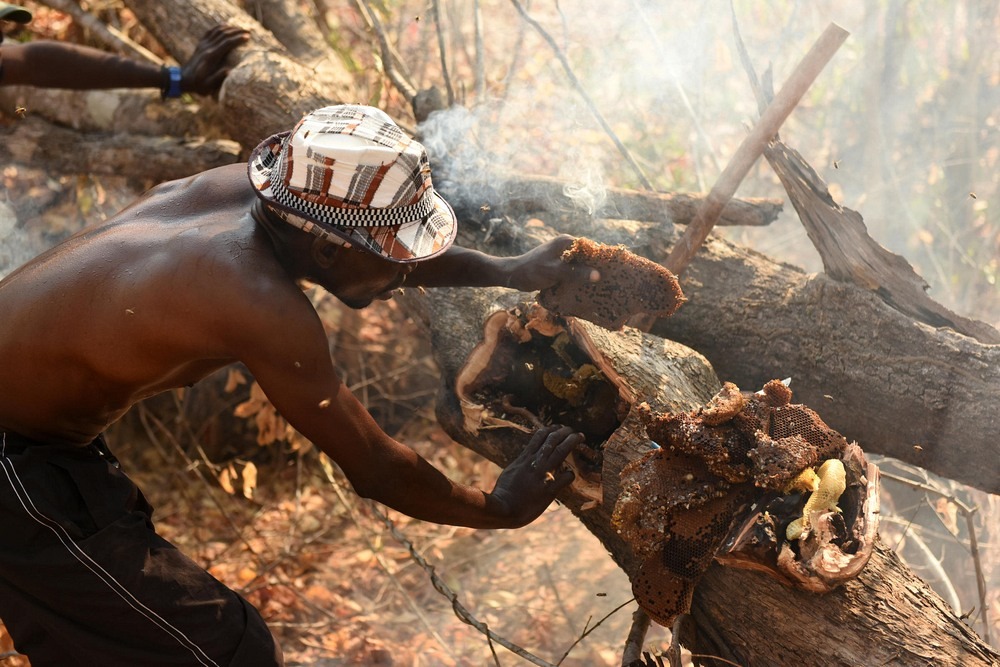
The honeyguide is one of the few birds in the world that is able to eat and digest beeswax. However, the tiny bird is unable to crack open a wild bee hive just by itself, let alone handling thousands of angry bees without getting stung. Therefore, it learned to lead humans to wild beehives, as they can subdue the bees with smoke and open and harvest the hives. This cooperation is beneficial for both sides: humans are more likely to find beehives when they are pointed in the right direction by the honeyguide, and after they collect the honey, the little bird is left with the wax and larvae as a ‘payment’.
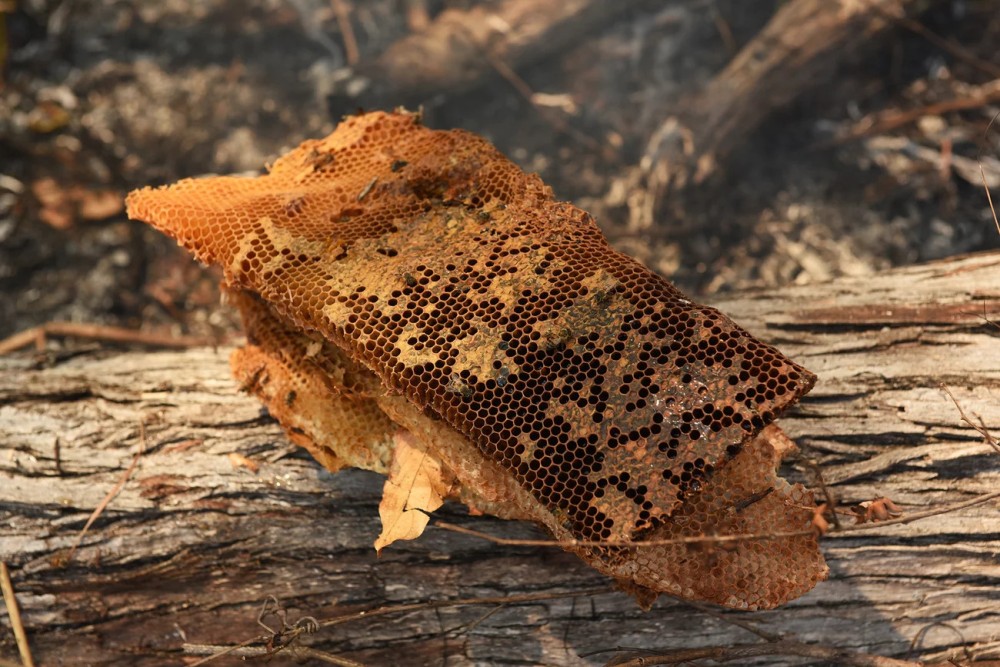
It’s the perfect collaboration: while greater honeyguides often know the location of many nests in their territories, they need help to access the tasty wax. Humans, on the other hand, are significantly less likely to find a beehive just by themselves, but they have the right tools and skills to harvest these nests.
Even more amazingly, these birds and the honey gatherers can communicate with each other. The honeyguide would approach humans with a loud chirping noise, which sounds like “tirr-tirr-tirr-tirr”, to attract their attention. Then it flies from tree to tree to indicate the direction of a beehive. To keep the bird interested in guiding, hunters often whistle, talk, and bang on trees until they reach the nest.
Humans have also developed a signal for when they are ready to hunt. Claire Spottiswoode, a zoologist at the University of Cambridge, has long been interested in the relationship between these birds and humans. While studying the birds among the honey hunters of the Yao community in Mozambique, she discovered that they can also attract the bird by uttering a loud “brrrr-hm” call. It’s a very specific hunting tradition among the Yao people, one that has been passed down from generations.
Spottiswoode found that the birds recognize and react to this “brrr-hm” call. To measure this, she recorded two other “control” calls; one was words spoken by the Yao hunters, and the other one was a call from another bird species. Then she played all three recordings throughout the territory of greater honeyguides. The results were clear: honeyguides were more likely to respond to the traditional “brrr-hm” call, and it increased the likeliness of being guided by a honeyguide from 33% to 66%, with a 75% success rate of finding a hive with the guidance of a bird.
This relationship between honeyguides and humans was first documented in 1588, when a small bird pecking at a candlestick in a church caught the attention of a Portuguese missionary based in Sofala, Mozambique. He wrote that the curious bird showed people the way to beehives. Then, recorded encounters with the bird kept popping up throughout the centuries. Most of these accounts, though, didn’t generate much interest in the honeyguide-human interactions, and the phenomenon was considered as part of the African folklore. However, it all changed in the 1980s, when Hussein Isack, a Kenyan birder, and Heinz Ulrich Reyer, a German zoologist, followed Boran honey hunters for 3 years. Through this field work they could confirm that the legends of the greater honeyguides are indeed true: the birds indeed communicate and interact with the hunters.
Even though the first western encounter dates back to the 16th century, experts believe that the unique partnership has a much longer history, and has probably evolved for hundreds of thousands of years. Since this free-living wild bird species isn’t domesticated and never received any training from people, the relationship has likely been formed through natural selection.
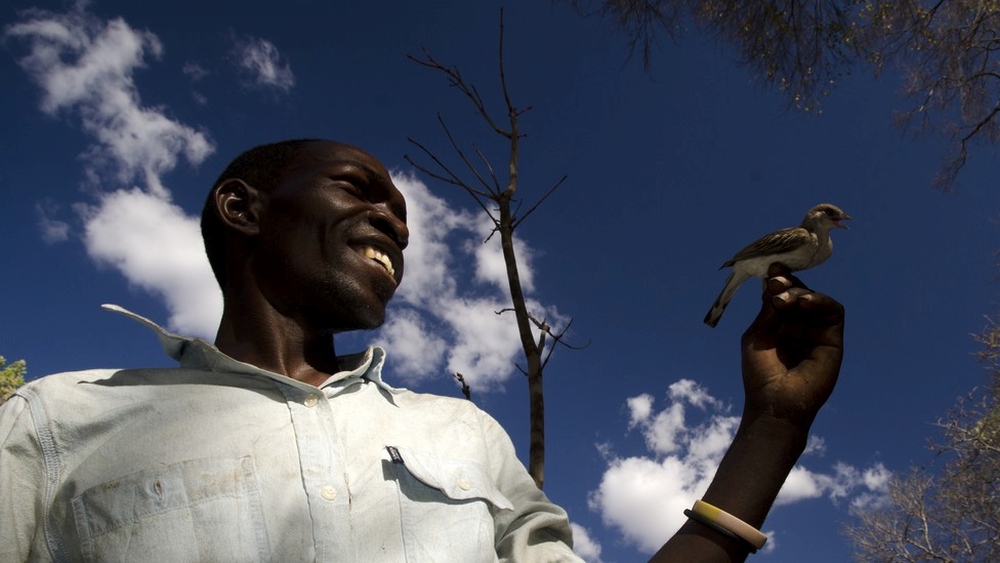
Traditional honey hunting with honeyguides is becoming less and less common, due to many villages having switched to keeping beehives instead of looking for them in the wild. This has even made honeyguides stop the guiding behavior due to the lack of response from honey hunters.
In the Niassa National Reserve, though, this hunting tradition still continues to thrive among the Yao community, who honor this rare example of human-animal cooperation.
 Donate


Related Posts
The Tiny Bird That Builds the World’s Largest Nests: Meet the Sociable Weaver
Giant Trees Up to 3000 Years Old Found in Tanzanian Rainforest Belong to Previously Unknown Species
The Gloster Canary: Rocking a ’60s Hairdo and Stealing Hearts
Why the Hoba Meteorite Left No Impact Crater Despite Being Earth’s Biggest Space Rock and Chunk of Iron
Living Fossil of the Namib Desert: The Welwitschia Plant Has Been Around for Over 200 Million Years an Can Live for Millennia
A New Ocean Is Forming in Africa Along a 35-Mile Crack That Opened Up in Ethiopia in 2005
46,000-Year-Old Bird Found by Ivory Hunters Frozen in Siberian Permafrost Looks Like It Died Yesterday
Found Only on Mount Kilimanjaro in Africa, These Prehistoric Plants Look Like a Cross Between a Cactus and a Pineapple
Real-Life ‘Angry Bird’ Captured on Camera by Wildlife Photographer in Nebraska
Turns Out Bumblebees Like to Play Ball as Much as Dogs or Humans, Suggesting They Have Feelings Too