An interesting visual comparison of lake depths and heights, comparing the highest navigable body of water in the world, Lake Titicaca on the border of Bolivia and Peru, and Lake Baikal in Russia, the world’s deepest lake, with the Great Lakes System in North America (click to enlarge / read explanation with more images below).

Lake Baikal is the deepest and oldest lake in the world, located in Siberia, Russia. It has a maximum depth of 1,642 meters (5,387 feet) and a volume of 23,615 cubic kilometers (5,670 cubic miles), which is more than all the Great Lakes of North America combined and amounts to 22–23% of the world’s fresh surface water. The lake’s incredible depth has to do with the fact that it is situated in a rift valley, created by the Baikal Rift Zone, where the Earth’s crust is slowly pulling apart.
Lake Baikal is home to more than 3,600 species of plants and animals, including freshwater seals, many of which are endemic to the lake.
Here’s an interesting relief map showing how deep Lake Baikal actually is (click image to enlarge).

Lake Titicaca is a large freshwater lake in the Andes mountains on the border of Bolivia and Peru. It is the highest commercially navigable lake in the world, with an elevation of 3,812 m (12,507 ft) above sea level. It is also the largest lake in South America by volume and surface area. The lake has a maximum depth of 281 meters (922 ft) and an average depth of 107 meters (351 ft).
Many smaller lakes worldwide are situated at higher altitudes, although these are non-navigable. The world’s highest elevation lake is Ojos del Salado pool in Argentina. Ojos del Salado is the world’s highest active volcano and the lake is situated at an elevation of 6,390 meters (20,965 ft). It has barely 100 meters (328 ft) in circumference.

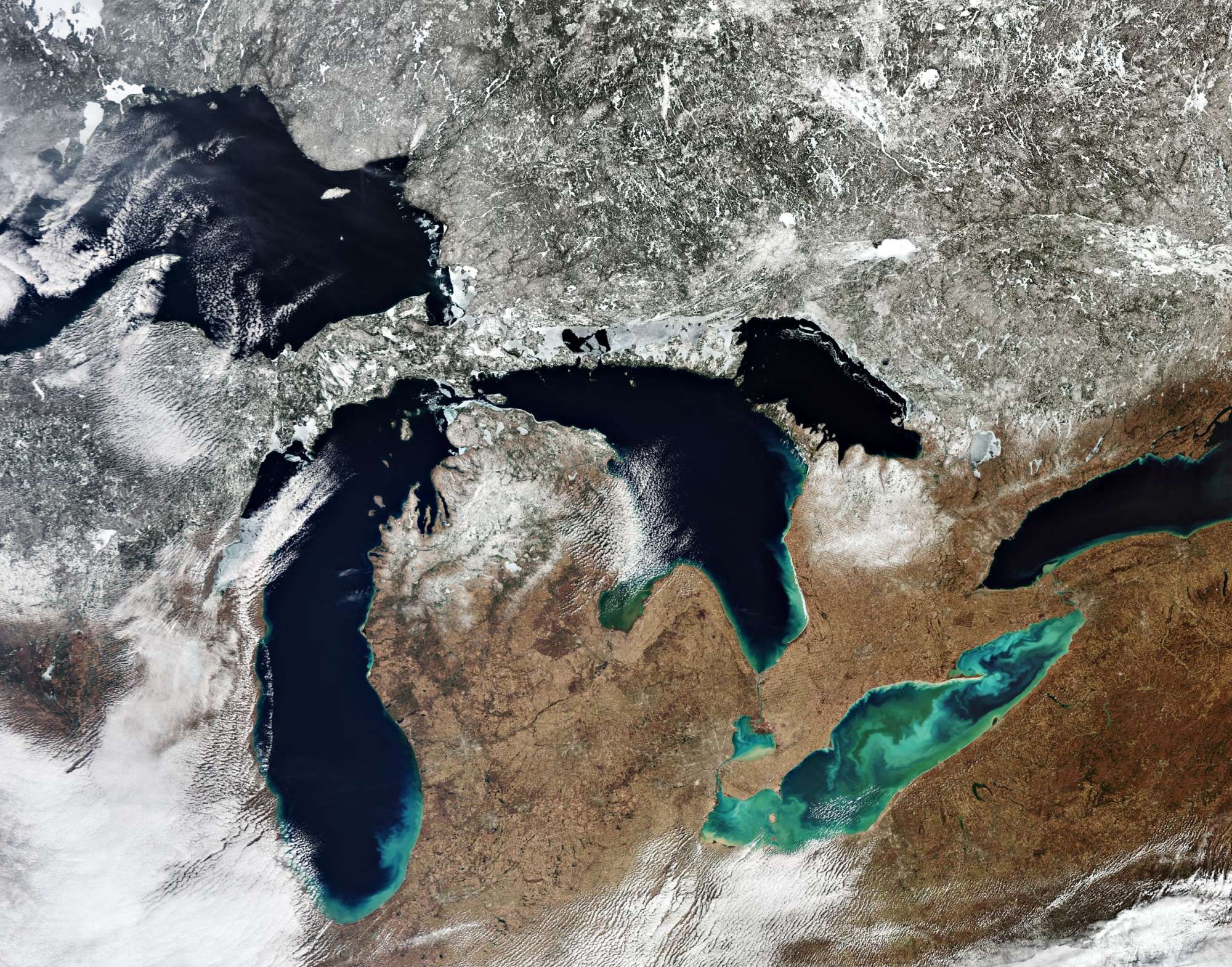
The Great Lakes system is the largest surface freshwater system in the world, containing about 22% of the world’s surface fresh water and spanning a total surface area of 244,106 km2 (94,250 square miles). It is the second-largest body of freshwater by total volume after Lake Baikal, containing about 21% of the world’s surface fresh water.
The average elevation of the Great Lakes is about 177 meters (582 ft) above sea level. The elevation difference between Lake Erie and Lake Ontario, which are connected by the Niagara River, is about 99 meters (325 ft). The lakes have varying depths, with Lake Superior being the deepest at 406 meters (1,333 ft). The entire system flows to the Atlantic Ocean via the St. Lawrence River.
 Donate


Loch Ness, at 744.6 ft should be included here.
not to mention Crater Lake in Oregon, the deepest lake in the US, 2nd deepest in North America.