New research brings light to a hidden ecosystem that once functioned as an Eden-like sanctuary for animal life, including early humans, at the southern tip of South Africa.
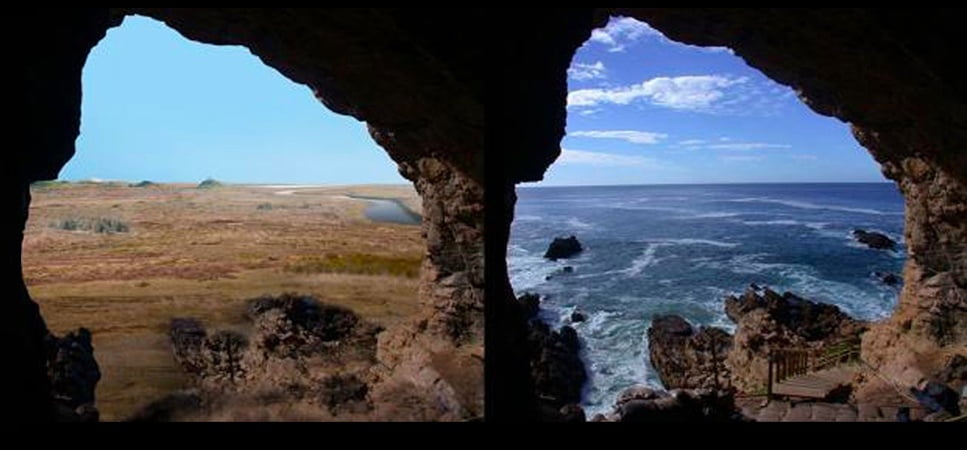
Now submerged in the ocean off the South African coast, the Palaeo-Agulhas Plain (PAP) could have provided a rich habitat for all kinds of animals during glacial periods, new research suggests. In these periods, coastal waters receded, exposing a shallow continental shelf at the southern tip of the African continent.
Today, researchers study the landscape – and the ancient evidence it reveals about early humans – through cave sites such as those at Pinnacle Point, near Mossel Bay. What are now coastal caves, in times long past would have looked out over vast plains inundated with rivers.
“During glacial cycles, the coastal shelf was exposed,” explains anthropologist Jamie Hodgkins from the University of Colorado Denver.
“There would have been a huge amount of land in front of the cave sites. We thought it was likely that humans and carnivores were hunting animals as they migrated east and west over the exposed [shelf].”

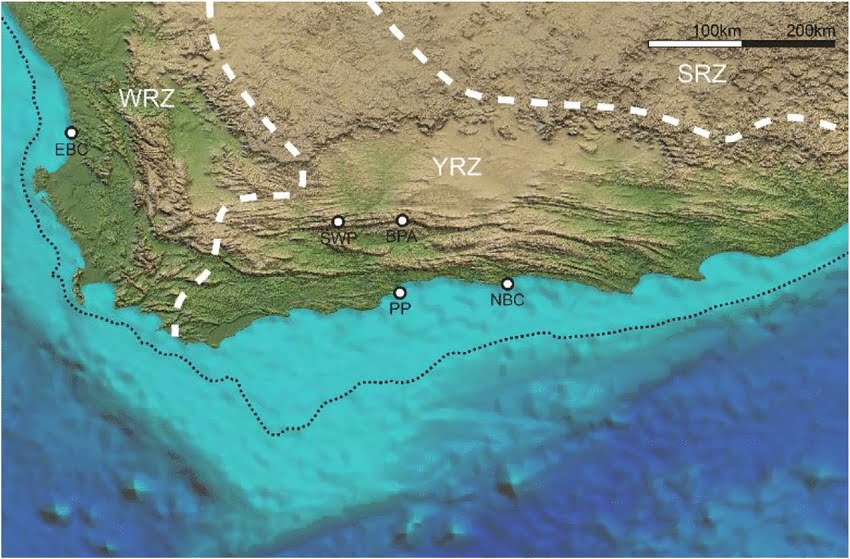
To test that hypothesis, Hodgkins and her team analysed the teeth of ancient herbivorous antelopes who lived at the site approximately 150,000 years ago. They were looking for signs of carbon and oxygen isotopes preserved in their tooth enamel, which can be used as an indicator of the travelling patterns of the animals.
Scientists already knew that seasonal rainfall influences the types of plants that grow in the eastern and western zones of the region; the presence of these plants in the animals’ diet could be traced through analysing molecular isotopes such as carbon-13 and oxygen-18, the latter of which shows up differently in summer and winter rainfall.
Hypothetically, then, varying isotope ratios found in the animals’ tooth enamel (via the isotopic signature called δ13C) could indicate the migratory expanse of the antelopes, moving between regions as the seasons changed. But that’s not what the researchers found.
Comparing the teeth from 39 specimens of hoofed animals including hartebeest, wildebeest, and springbok, the researchers found that the isotope signature, for the most part, didn’t vary between migratory animals and non-migratory ones – such as the common reedbuck, which served as a control group in the study.
“Overall, the δ13C results do not support an ecosystem model in which most herbivores were undergoing long distance point-to-point migrations that would be consistent with an east and west migration system along the PAP,” the researchers write in their paper.
That finding is in line with a similar discovery made by a previous study, leading Hodgkins and team to conclude that the conditions in the exposed, coastal PAP region could have been so flourishing, that even migratory animals opted to stay put.
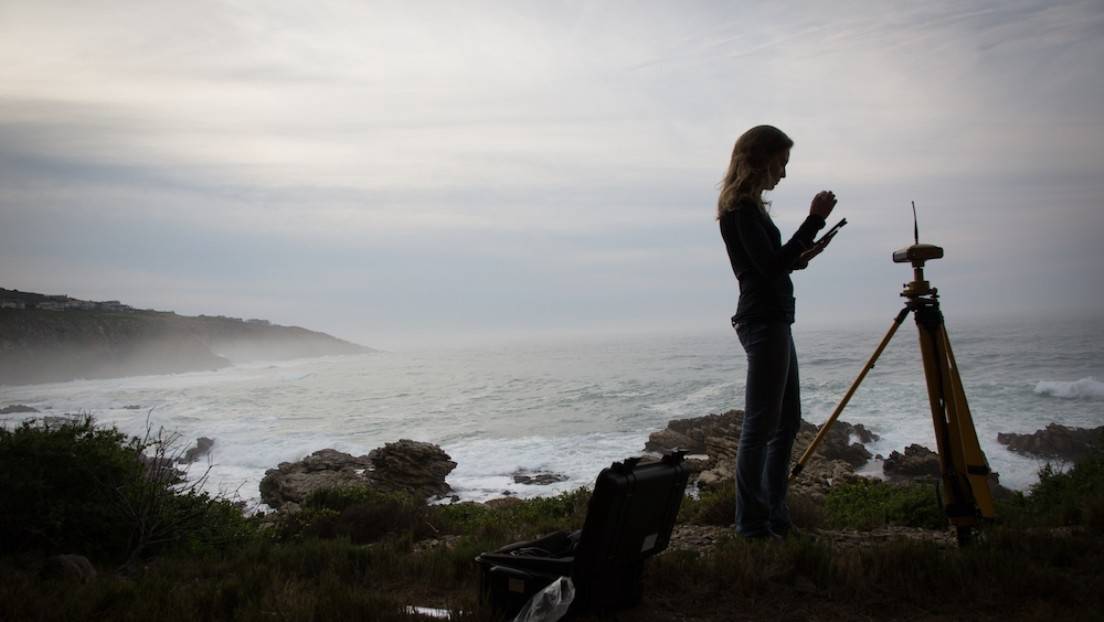
“They weren’t struggling at Pinnacle Point,” Hodgkins said. “We now know that powerful river systems supplied the expanded coast, thus animals didn’t have to be migratory. It was a great location, resource-wise.”
This coastal shelter wasn’t just bountiful for other creatures, too. The hospitable conditions likely attracted a diverse array of animal life, making the terrain a rich hunting ground for early humans in the Pleistocene, regardless of how glacial cycles may have determined the shoreline over the eons.
“During interglacials when the coast moved closer to the caves humans had shellfish and other marine resources, and when the coast expanded in glacial times hunters had access to a rich, terrestrial environment,” Hodgkins says.
“Hunters wouldn’t need to be as mobile with all of these herbivores wandering around.”
Some members of the research team had previously found evidence to suggest humans thrived in this area even during the eruption of the Mount Toba supervolcano about 74,000 years ago.

That feat might not have been possible without the generous resources afforded by this coastal haven, enabling humans to overcome even the terrible hardships of a volcanic winter.
While there’s a lot more to understand about the Palaeo-Agulhas Plain and the ancient conditions that prevailed in this long-gone landscape, scientists have now arrived at a real breakthrough.
Hodgkins’ study is part of a new collection of 22 research papers on this ancient Eden, helping us comprehend just how important this vast prehistoric ecosystem was in sheltering and enabling life during the Pleistocene.
“The Palaeo-Agulhas Plain, when exposed, was a ‘Serengeti of the South’ positioned next to some of the richest coastlines in the world,” lead researcher Curtis Marean from Arizona State University pointed out.
“This unique confluence of food from the land and sea cultivated the complex cultures revealed by the archaeology and provided safe harbour for humans during the glacial cycles that revealed that plain and made much of the rest of the world unwelcoming to human life.”
Although this lush Eden was indeed lost later on in history, it apparently allowed us humans to survive.
 Donate


Related Posts
Meet Lanmaoa asiatica: The Mushroom That Can Make You See Little People
How the Babylonians Counted to 60 Using Their Hands and Changed Mathematics Forever
The Road to Heaven: China’s Tianmen Mountain Big Gate Road Might Be the Craziest Drive on Earth
Scientists Painted Cows Like Zebras — and It Cut Fly Landings by Half
‘Dark Oxygen’ Found on Ocean Floor Challenges What We Thought About Life’s Origins
We’re Beginning to Understand Bonobo Speech—And Its Syntax Is Surprisingly Human
The Woman Who Walked Across a Continent Because She Missed Home: Lillian Alling’s Epic Journey
Castel Meur: The Little House Between the Rocks That Refuses to Be a Tourist Attraction
Every Year, the Sea Parts in Korea for a Short Time—A Natural Event Echoing Moses’ Story
Whales Sing More When Their Stomachs Are Full, New Study Finds