Archaeologists in London have uncovered an ancient Roman mosaic – the like of which has not been seen in the city for 50 years.
At its peak, the ancient Roman Empire covered around 2.3 million square miles (5.9 million square kilometers) over the continents of Europe, Asia, and Africa. So, while archaeological finds from the Roman period are more or less common in the UK, a recent discovery in London is something that scientists can only dream of.
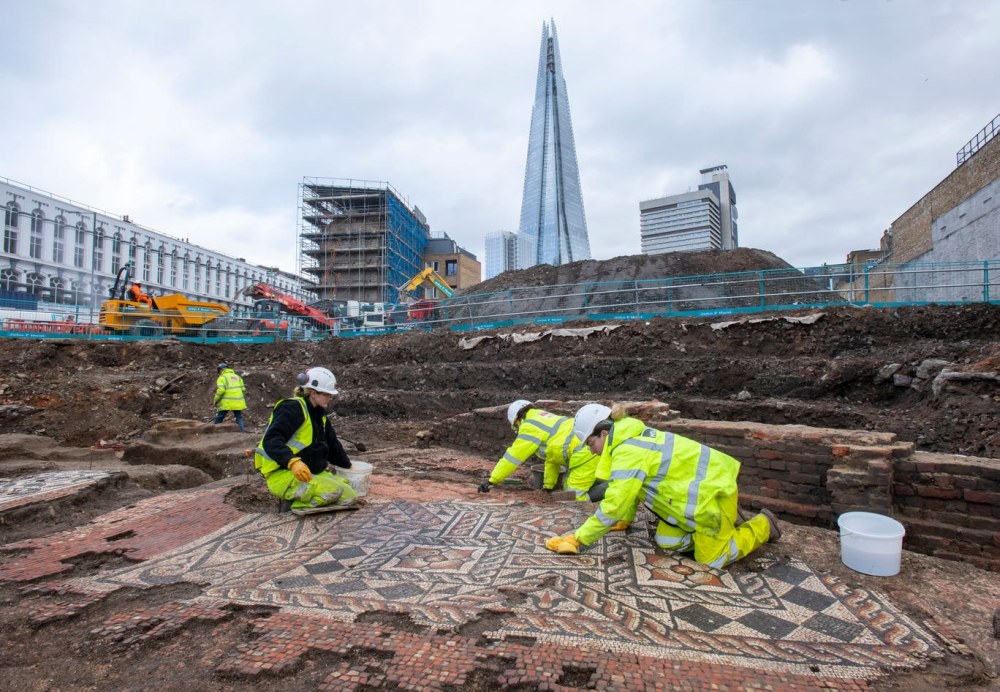
Archaeologists at the Museum of London Archaeology (MOLA) unearthed a 26.2 feet (8 meters) long Roman-era mosaic in the heart of the city, close to London Bridge. The ‘once-in-a-lifetime’ archaeological find was discovered under a construction site previously used as a car park.
According to MOLA, the well-preserved Roman mosaic dates back to the late second or early third century. This is the largest mosaic found in the capital in the past 50 years, and the approximately 1800-year-old floor-montage has survived in a truly fantastic condition.
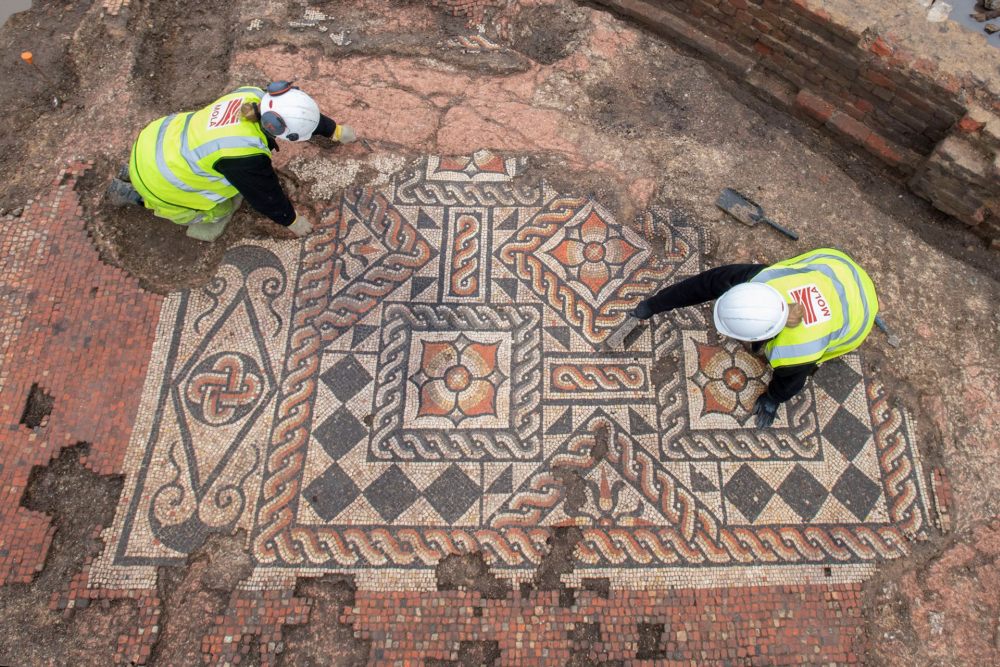
The mosaic was thought to decorate the floors of a triclinium – a formal dining room in Roman buildings. It is believed that it belonged to a mansio, or motel, where high-ranking state officials could rest on couches and feast while admiring the gorgeous mosaic floor, which comprises of two highly decorated panels.
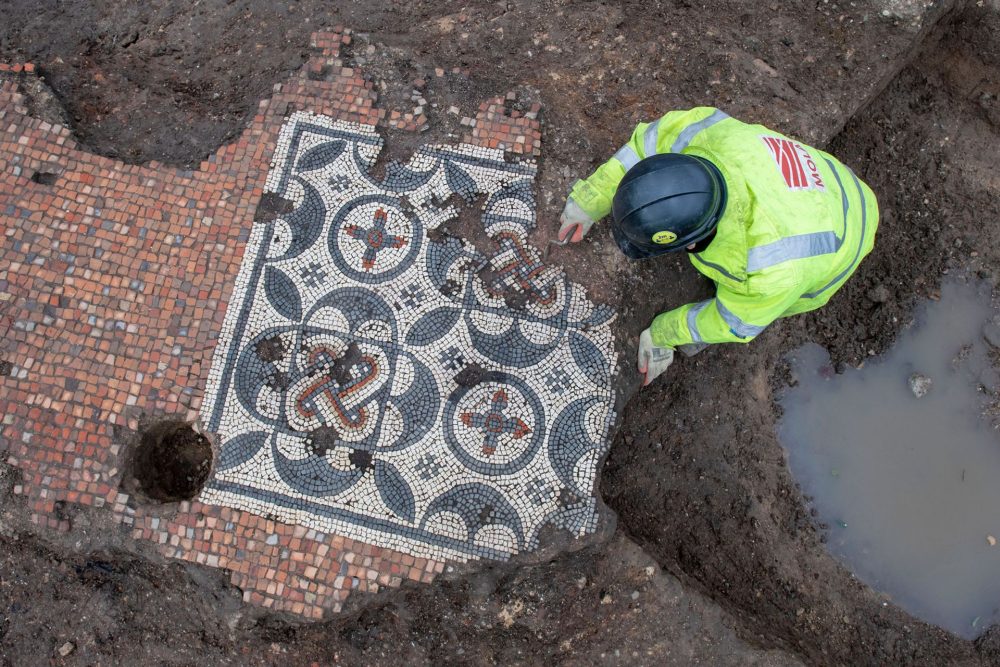
The larger mosaic panel is set within a red tessellated floor and it’s decorated with colorful flowers surrounded by guilloches – a design of intertwining strands. It also includes a Solomon’s knot, which is a traditional looped motif that has been used since ancient times. The design on the smaller panel also has two Solomon’s knots with lotus flowers, and several other geometric elements.
Archaeologists working on the excavation also discovered traces of an even earlier mosaic beneath the currently visible one. This indicates that the room was most likely refurbished over the years.
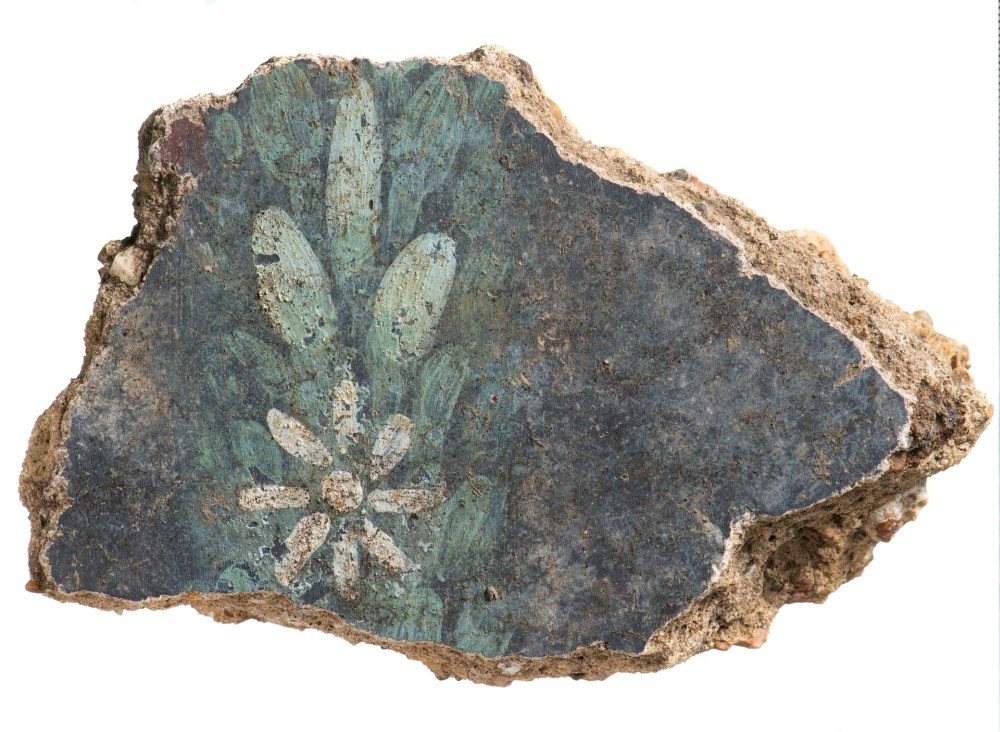
The base and the outlines of the building that holds these mosaics are still being uncovered, but experts believe that it was likely a large complex with a central courtyard. Moreover, the remains of another Roman-era house were also found near the site, which archaeologists think was probably the private residence of wealthy aristocrats. The traces of lavishly painted walls, coins and jewelry have also been found.
Items, such as a decorated bronze brooch, a bone hairpin and a sewing needle, also indicate that the area was probably inhabited by wealthy citizens. “These finds are associated with high-status women who were following the latest fashions and the latest hairstyles,” said Antonietta Lerz, site supervisor at MOLA.
The site was located on the outskirts of Londinium, also known as Roman London – the capital of Roman Britain, during most of the era of Roman rule, until it was abandoned in the 5th century CE. The area is located on the north bank of the River Thames that corresponds to the modern City of London.
Scientist credit the design of the findings to a team of mosaicists called the Acanthus group. A close parallel of the smaller mosaic panel was unearthed in Trier, Germany, which suggests the artisans were working on both sites, and that they traveled abroad as well.
This incredible time-capsule will be subject to further analyzation, and hopefully go on display in the near future.
 Donate


Related Posts
The Road to Heaven: China’s Tianmen Mountain Big Gate Road Might Be the Craziest Drive on Earth
The Woman Who Walked Across a Continent Because She Missed Home: Lillian Alling’s Epic Journey
Castel Meur: The Little House Between the Rocks That Refuses to Be a Tourist Attraction
Every Year, the Sea Parts in Korea for a Short Time—A Natural Event Echoing Moses’ Story
The Vikings’ Legacy: Iceland’s Turf Houses – Hobbit Homes That Vanish Into the Landscape
Chariot Races and Hippodromes: Here Are the Best-Preserved Ones That Take You Right Back to Ancient Roman Times
There’s a Museum in Japan Dedicated to Stones That Look Like Faces: The Hall of Curious Rocks
Tigres Island – Angola’s Eerie Ghost Town Trapped in Time
Norway’s 800-Year-Old Borgund Stave Church Was Built Entirely of Wood, Using Viking Shipbuilding Techniques
A House, A Tree, and Not Much Else: Welcome to Just Room Enough Island