All but five of the world’s nations has agreed to the Treaty on the Non-Proliferation of Nuclear Weapons. Yet, the threat of nuclear war is still very much imminent.
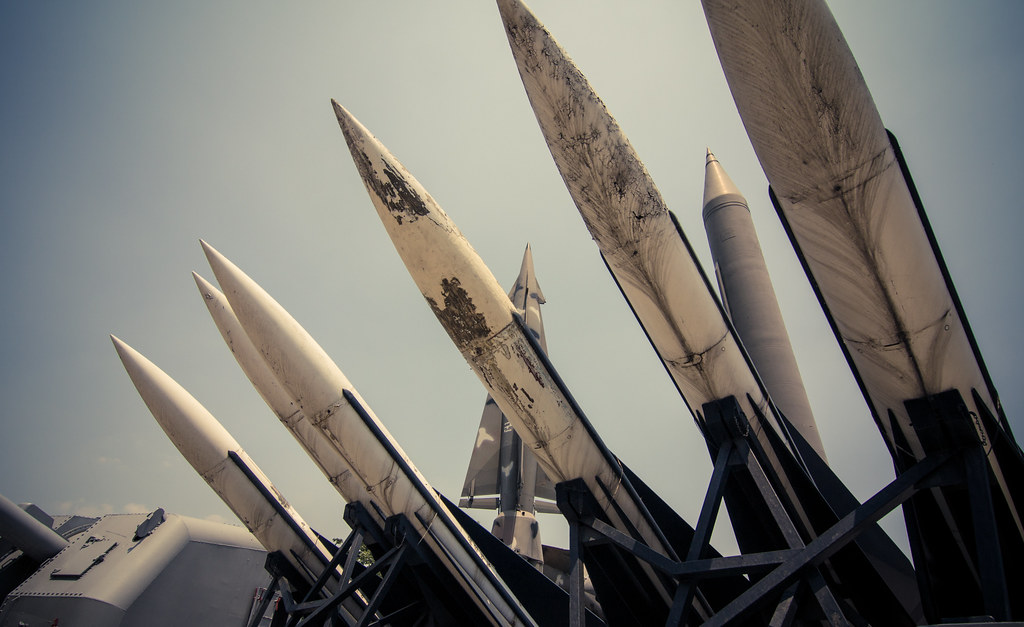
While understandably, countries try to keep the exact locations and numbers of their weapons of mass destruction a secret, we know that a handful of nations do possess them – allowing them to wipe out millions with the press of a button.
But where are the world’s nuclear weapons located? And how many?
Not surprisingly, most of the world’s nuclear arsenal is owned by the US and Russia. And in this case “most” means almost all of it. Together, they possess around 90 percent of an estimated total of 12,700 nuclear weapons on the planet – that’s nine out of every 10 nukes across the entire world.
Just look at this.

The two biggest mushroom clouds in the picture are a legacy of the Cold War, a period of increasing tension and paranoia between the USA and the former USSR that lasted from the late 1940s to the end of the ’80s. During World War II, both countries were trying to develop nuclear weapons, with the US succeeding first. The resulting bombing of Hiroshima and Nagasaki remain the only times nuclear weapons have been used in warfare so far.
In the subsequent decades, the two nations dramatically escalated their nuclear capabilities, creating tens of thousands of such weapons. By the mid-1980s, the total number of nuclear armaments in the world reached 70,000, with the USSR topping out at just over 40,000 and the US following somewhere above 31,000.
That’s about enough for wiping out entire earth. Several times.
“In the 1970s and ’80s, even decision makers will say the U.S. and Soviet buildup was insane. Both sides overbuilt without predictability,” Richard J Burt, chief negotiator of the Strategic Arms Reduction Treaty under President George Bush told the New York Times in 2019.
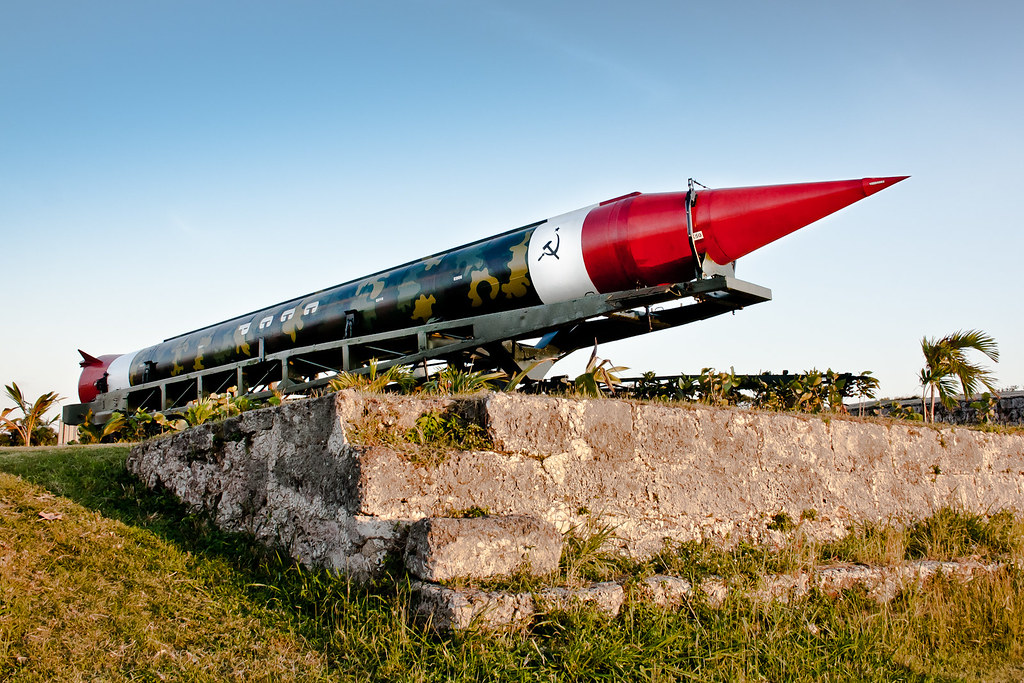
At the end of World War II, scientists at Los Alamos had estimated that it would only take about 10 to 100 of these weapons to destroy the entire planet, but the US and the UUSR had 30 to 40 thousand each! Both had also developed mechanisms to launch nuclear warheads even after having been attacked themselves.
The result: mutually assured destruction – aptly shortened to MAD. That’s the short name for the policy, “you won’t nuke me, because then I’ll nuke you.”
“Donald Brennan …[coined] the acronym MAD to ridicule the idea that in a nuclear war, or even a large conventional conflict, each side should be prepared to destroy the other’s cities and society,” the late political scientist Robert Jervis explained in Foreign Policy back in 2009.
“Of course, this objective was not sensible, but MAD proponents argued that was the point: The outcome would be so dreadful that both sides would be deterred from starting a nuclear war or even taking actions that might lead to it.”

Naturally, other world powers wanted to follow suit and some of them managed to do so, too. Among the 30 NATO countries, only the UK and France have nuclear weapons apart from the US. Compared to the latter, they have pretty tiny arsenals though, with France holding around 290 weapons and the UK holding 225. Of course, that’s a small number only when compared to the USA’s arsenal. When you consider the unimaginable destruction just one of those weapons could unleash, it’s actually a LOT.
Also, a handful of countries throughout NATO house an estimated 100 US nukes as part of the alliance’s nuclear sharing program. Although the weapons are guarded by US Air Force personnel, it’s the host country’s air force that can deploy them in case doomsday comes.
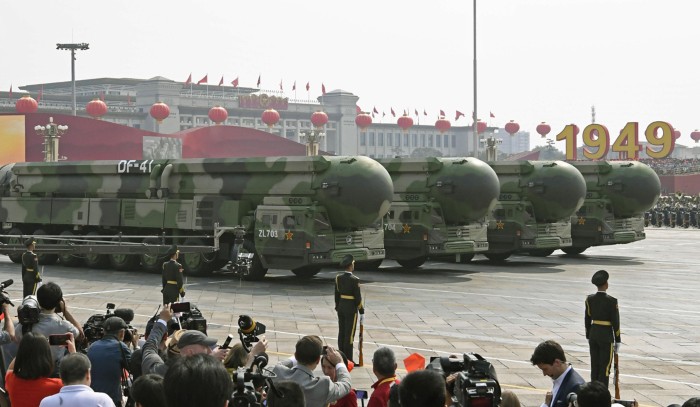
In China, the first nuclear weapons test occurred all the way back in 1964, after nearly a decade of collaboration with USSR scientists. With 350 weapons, the country is believed to have the third-largest arsenal of the world’s nuclear states, expected to grow rapidly over the coming decade.
Some experts on Chinese policy believe this is a defensive move that hopefully won’t increase the existential threat from China – it is, after all, the only nuclear country in the world that has committed “not to use or threaten to use nuclear weapons against non-nuclear-weapon States or nuclear-weapon-free zones at any time or under any circumstances,” and “not to be the first to use nuclear weapons at any time or under any circumstance.”
Well, let’s hope those experts are right.
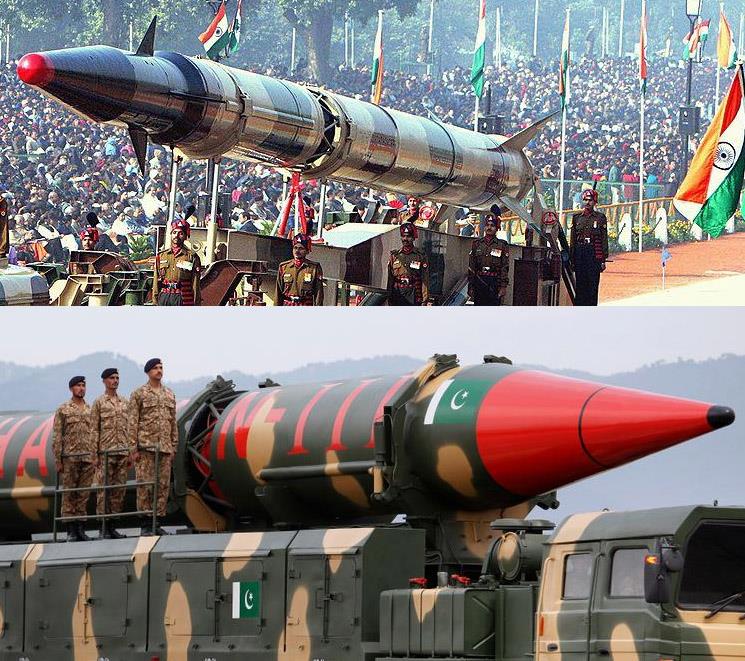
India and Pakistan have been hostile to each other ever since the British made their “messy, hasty, and clumsily improvised” exit from the subcontinent in 1947. The partition of India – the historical term for the separation of British India into Hindu-majority India and Muslim-majority Pakistan – was marked by extreme and unexpected cruelty and bloodshed from both sides, and the two countries’ relationship is marked by it to this day. They have gone to war with each other no fewer than four times since the partition happened.
No wonder, then, that the Indian subcontinent is seen by many as a potential stage for any future nuclear war. Neither have signed the Non-Proliferation Treaty, and the two countries have engaged in a nuclear arms race very similar to the “Cold War” between the US and Russia – albeit on a much smaller scale. By today, India has amassed 160 nuclear weapons, and Pakistan 165.
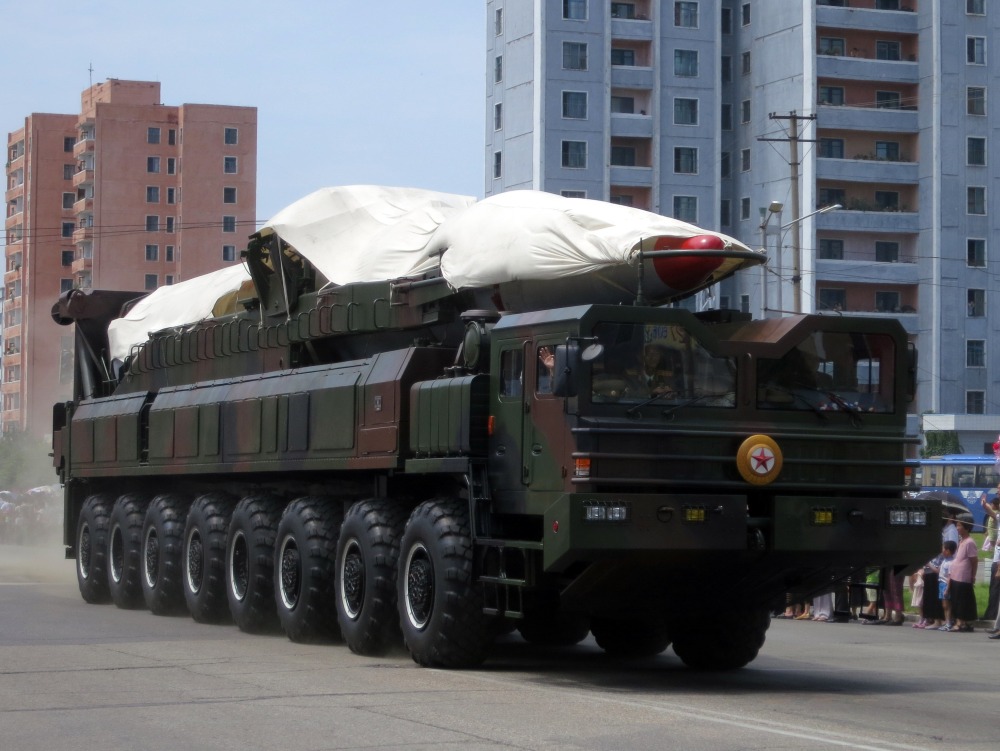
Thanks to global presidential “button”-measuring contest, we all know that North Korea boasts a nuclear arsenal. That said, due to the country’s notoriously isolated government and society, we don’t know that much about that arsenal, except that it currently amounts to about 20 nuclear weapons.
What we do know, though, is that five years ago the country conducted its largest nuclear test to date at the Punggye-ri test site. North Korean officials claimed to be testing a thermonuclear weapon, with an estimated explosive power of between 100 to 370 kilotons (even the lower end of that estimate would make the weapon six times more powerful than the bomb dropped on Hiroshima in 1945).
The Asian country does also now possess intercontinental ballistic missiles capable of reaching the US and Europe.
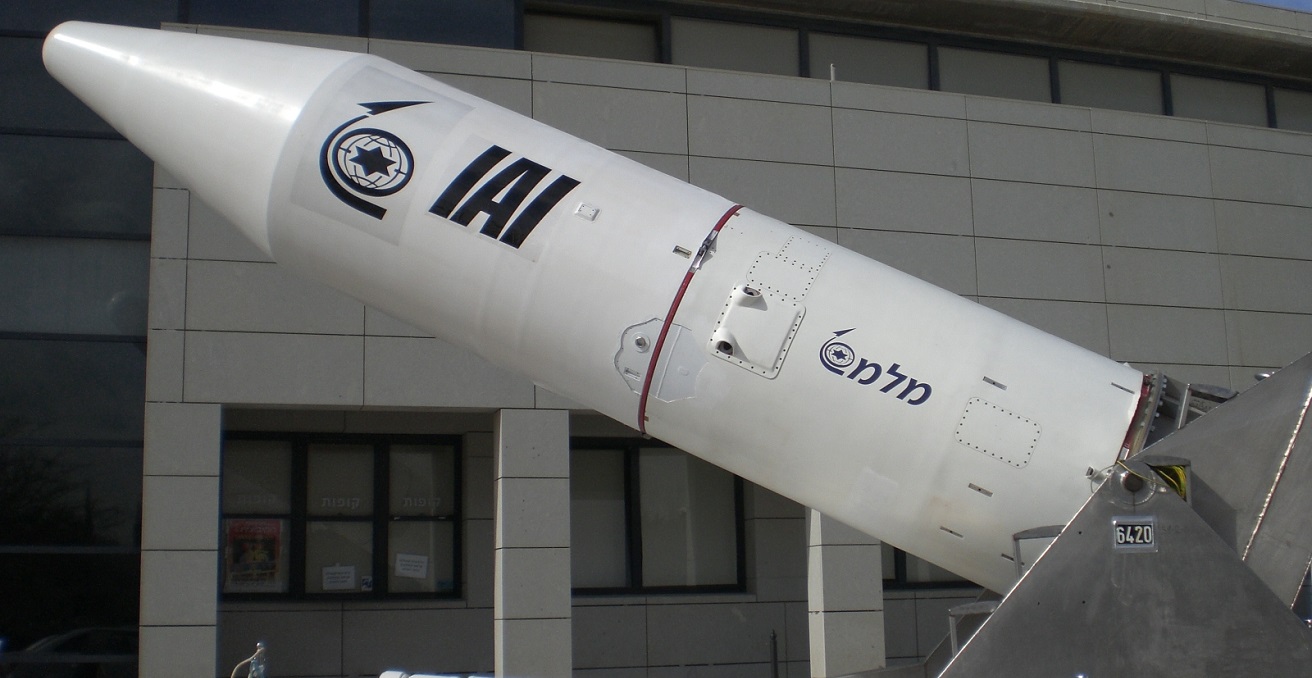
Israel has the world’s eighth largest nuclear arsenal, despite the country never formally admitting to having nukes. Still, it’s been an open secret ever since 1986, when former nuclear technician and peace activist Mordechai Vanunu blew the whistle in the British press. Satellite images from last year showed a nuclear facility at the center of Israel’s nuclear weapons program undergoing a huge construction project, and the country has even conducted nuclear weapons tests.
US and Australian support has allowed Israel to avoid being held accountable for its nuclear weapons program. “Essentially the bargain has been that Israel keeps its nuclear deterrent deep in the basement and Washington keeps its critique locked in the closet,” explained Robert Satloff, executive director of the Washington Institute for Near East Policy, in a 2013 Washington Post article.
This also meant that for many years – and some in Washington believe even to this day – Israel’s nuclear program was reliant on black market dealings and even theft, which, coupled with the official policy of “nuclear ambiguity”, makes the country’s nuclear arsenal even more difficult to estimate than most. Analysts’ best guesses are that Israel has enough material for assembling around 80 or 90 nuclear bombs.
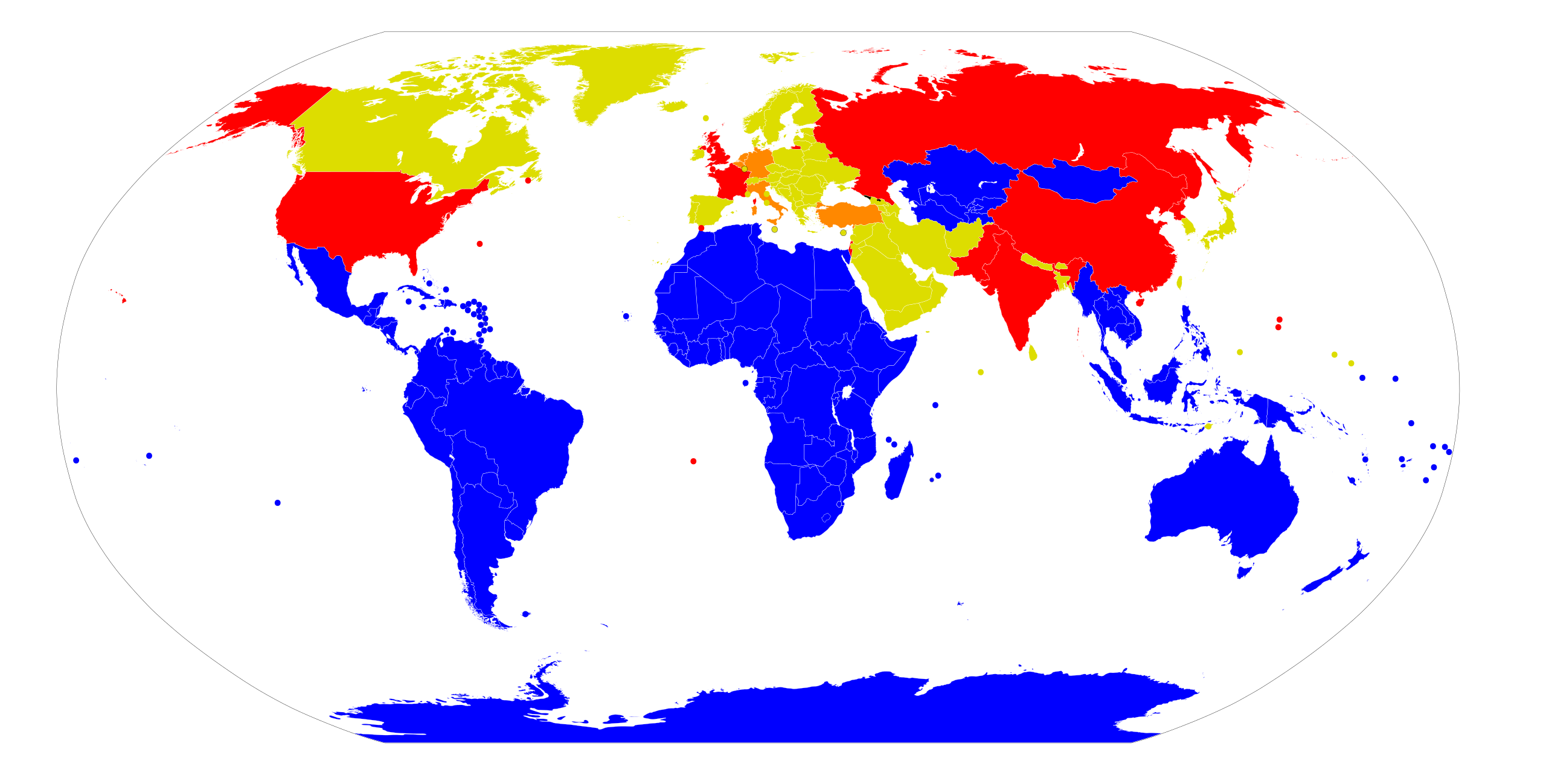
And that’s all folks. In the world outside those nine countries, none is known to have nuclear weapons. 0, zero, zilch, nada, not a one.
That sea of blue you can see on the map is the world’s Nuclear Weapon Free Zone: 84 million square kilometers where the development, manufacturing, control, possession, testing, stationing, or transporting of nuclear weapons is fully – and verifiably – banned.
The yellow countries are all signatories to the Non-Proliferation Treaty who do not have nuclear weapons. In fact, only the red nations – the nine we’ve covered here – have nuclear weapons. And most of us agree that’s more than enough.
 Donate


Related Posts
The Road to Heaven: China’s Tianmen Mountain Big Gate Road Might Be the Craziest Drive on Earth
Nördlingen, the Medieval German Town Built from Diamonds in a Meteorite Crater
Island in Lake on Island in Lake on Island in Lake: This Is the World’s Only 5th Order Recursive Island
500 Days in Darkness: The Long-Buried Story of Priest’s Grotto, a Holocaust Refuge in One of the World’s Longest Caves
Kutkhiny Baty: The Place That Nature Made to Look Unnatural
The Old Man of Hoy: How Scotland’s Towering Sea Stack Lost a Leg and May Soon Fall
La Rinconada, Peru: The World’s Highest Town — and One of Its Most Lawless
Castel Meur: The Little House Between the Rocks That Refuses to Be a Tourist Attraction
Every Year, the Sea Parts in Korea for a Short Time—A Natural Event Echoing Moses’ Story
The Vikings’ Legacy: Iceland’s Turf Houses – Hobbit Homes That Vanish Into the Landscape