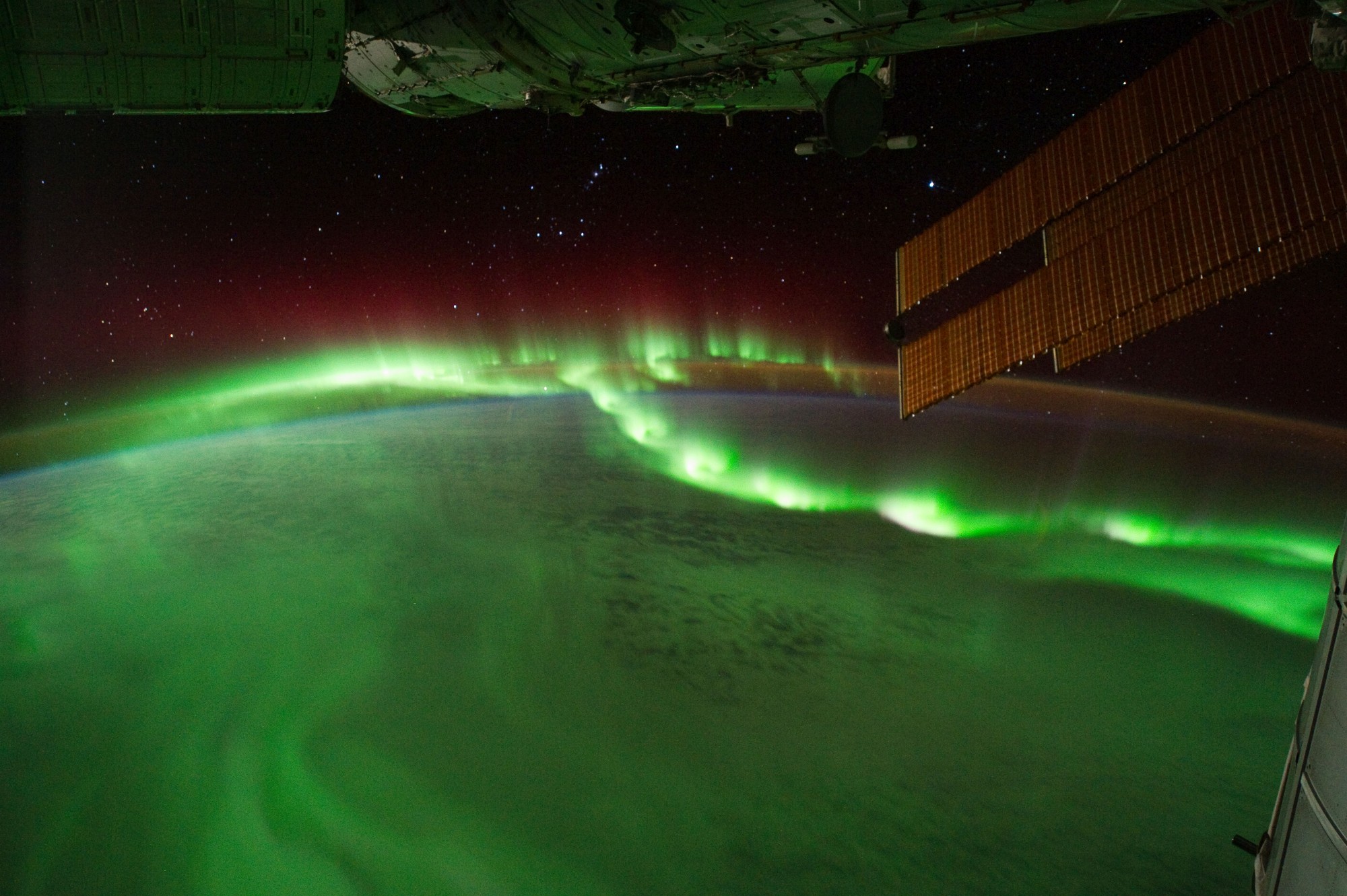
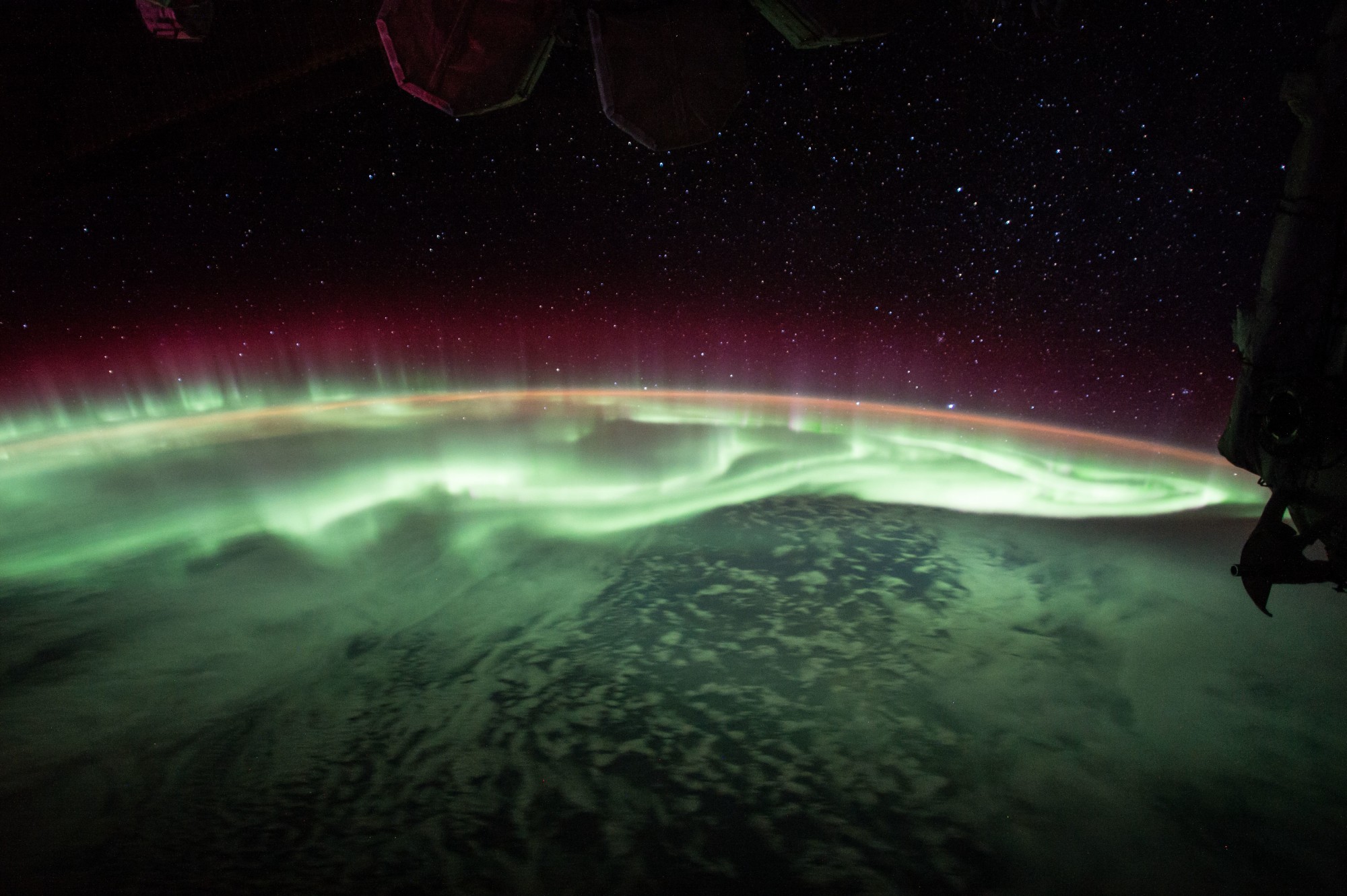
Captured from the vantage point of the ISS, this photograph depicts the aurora australis, or “southern lights,” gracefully coursing through the Earth’s atmospheric expanse. The station was situated at an altitude of 271 miles above the southern Indian Ocean, between the continents of Asia and Antarctica. Image credit: NASA
The aurora, known as the northern lights in the north and the southern lights in the south, is a mesmerizing phenomenon of luminous illumination in the nighttime atmosphere. It is named for the Roman deity associated with the break of dawn and manifests itself at the Earth’s northern and southern poles.
At times, the interaction between space weather and Earth can result in auroras expanding beyond the polar regions. These dynamic displays of vibrant lights exhibit an ever-changing nature, fluctuating in both form and intensity, ranging from faint and scattered to luminous enough to provide ample reading light.
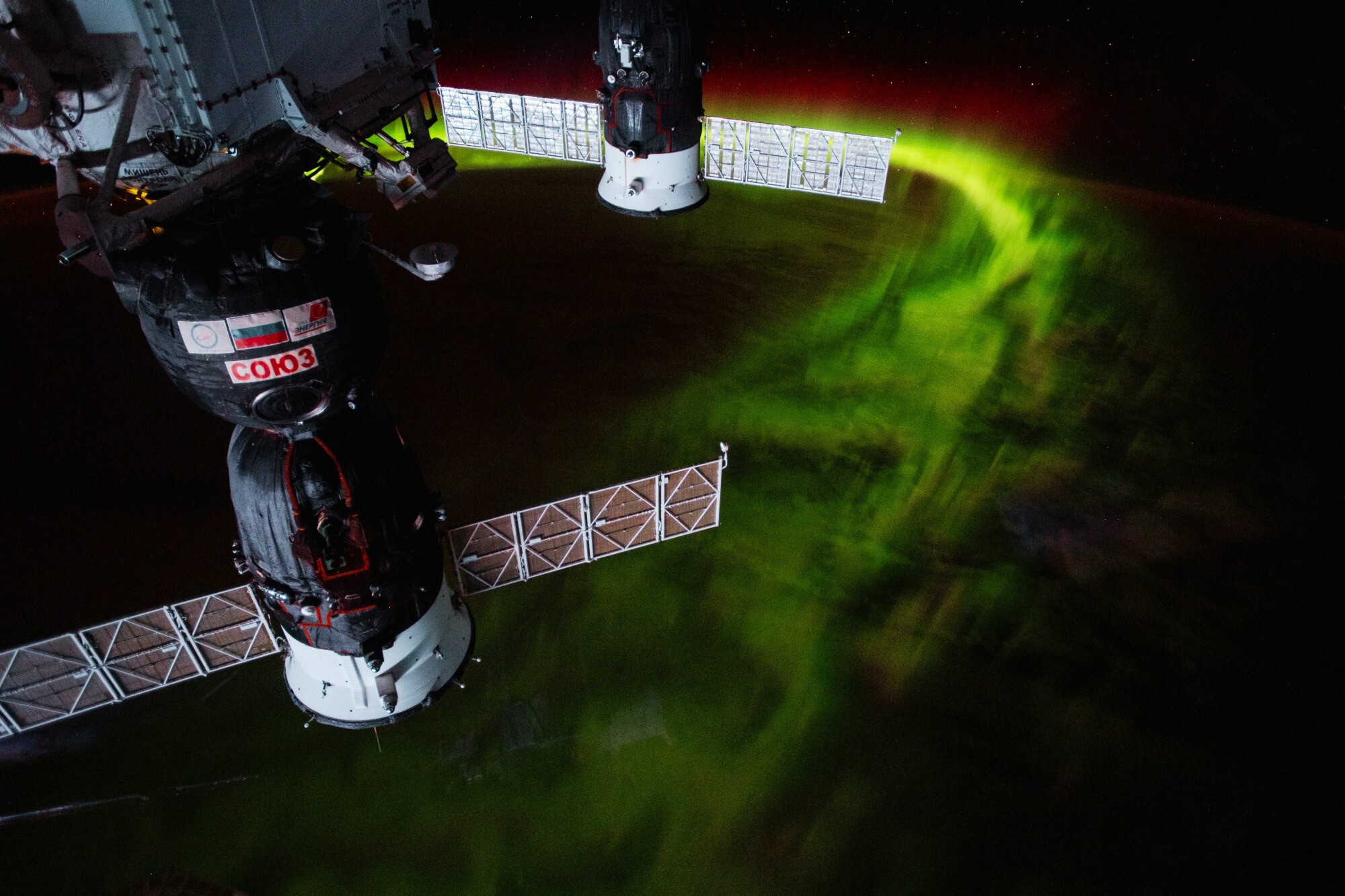
The dancing lights of the aurora provide spectacular views on the ground, and equally, if not even more mesmerising, views when viewed from space. The breathtaking images below of southern and northern auroras have been taken by astronauts during their missions aboard the International Space Station (ISS).
Seen from the ISS while it was near the apex of its orbital trajectory, a breathtaking display of the aurora borealis, or “northern lights,” illuminates the Canadian skies. In the left foreground, the primary solar arrays of the station are visible. This captivating snapshot was captured by a crew member of Expedition 53 on September 15, 2017. Image credit: NASA
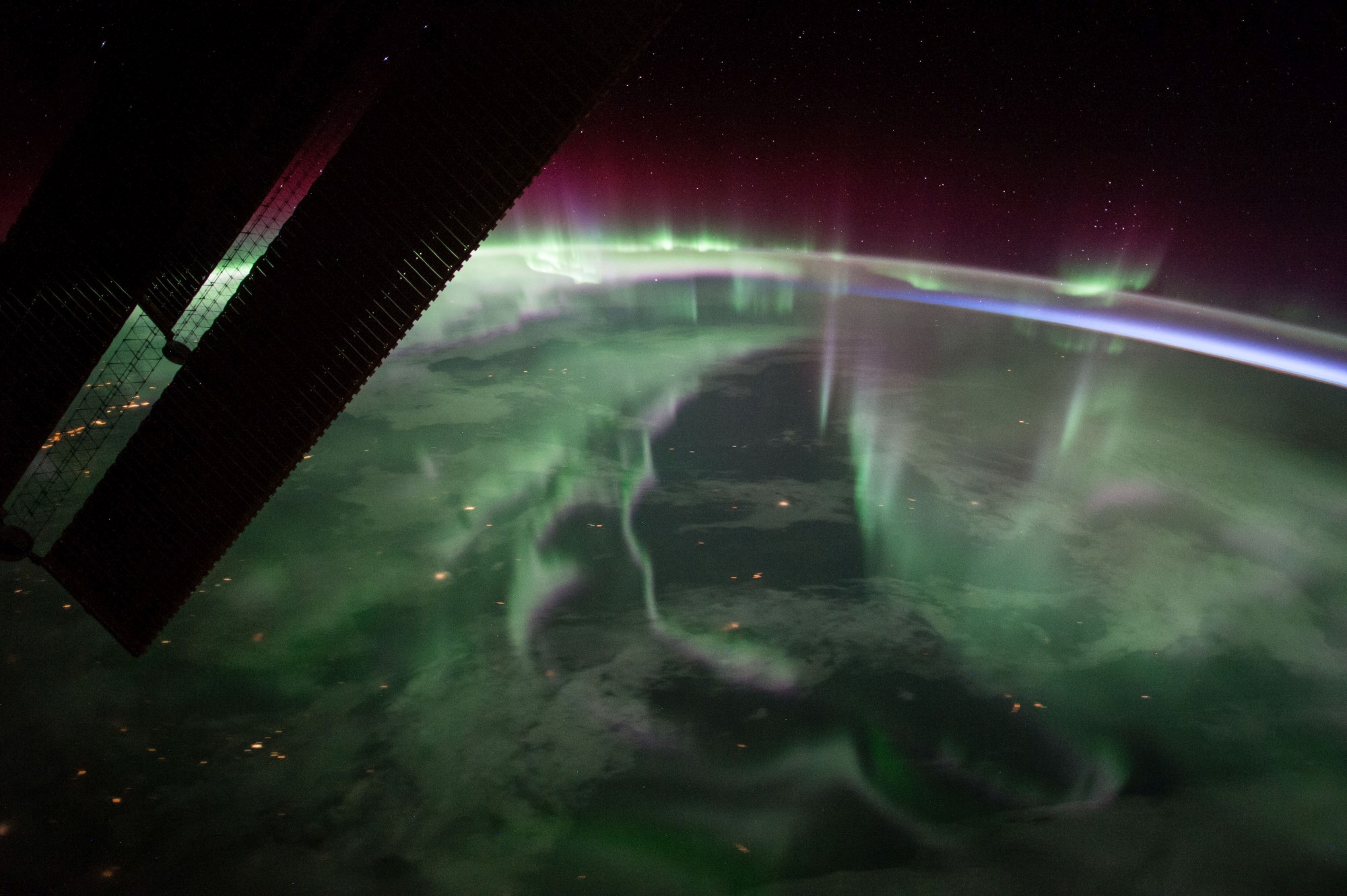
While stationed on the ISS, NASA astronaut Josh Cassada captured a series of photographs showcasing the mesmerizing aurora phenomenon. This photo was taken during the station’s passage over southeastern Manitoba. Cassada, in awe of the sight, expressed his astonishment with the comment “Absolutely unreal” on Twitter. Reports from The Washington Post indicate that people on the ground, as far as Alaska, Washington, Michigan, New York, and even Ohio, witnessed the vibrant hues of pulsating reds, greens, and purples of the aurora. Image credit: NASA
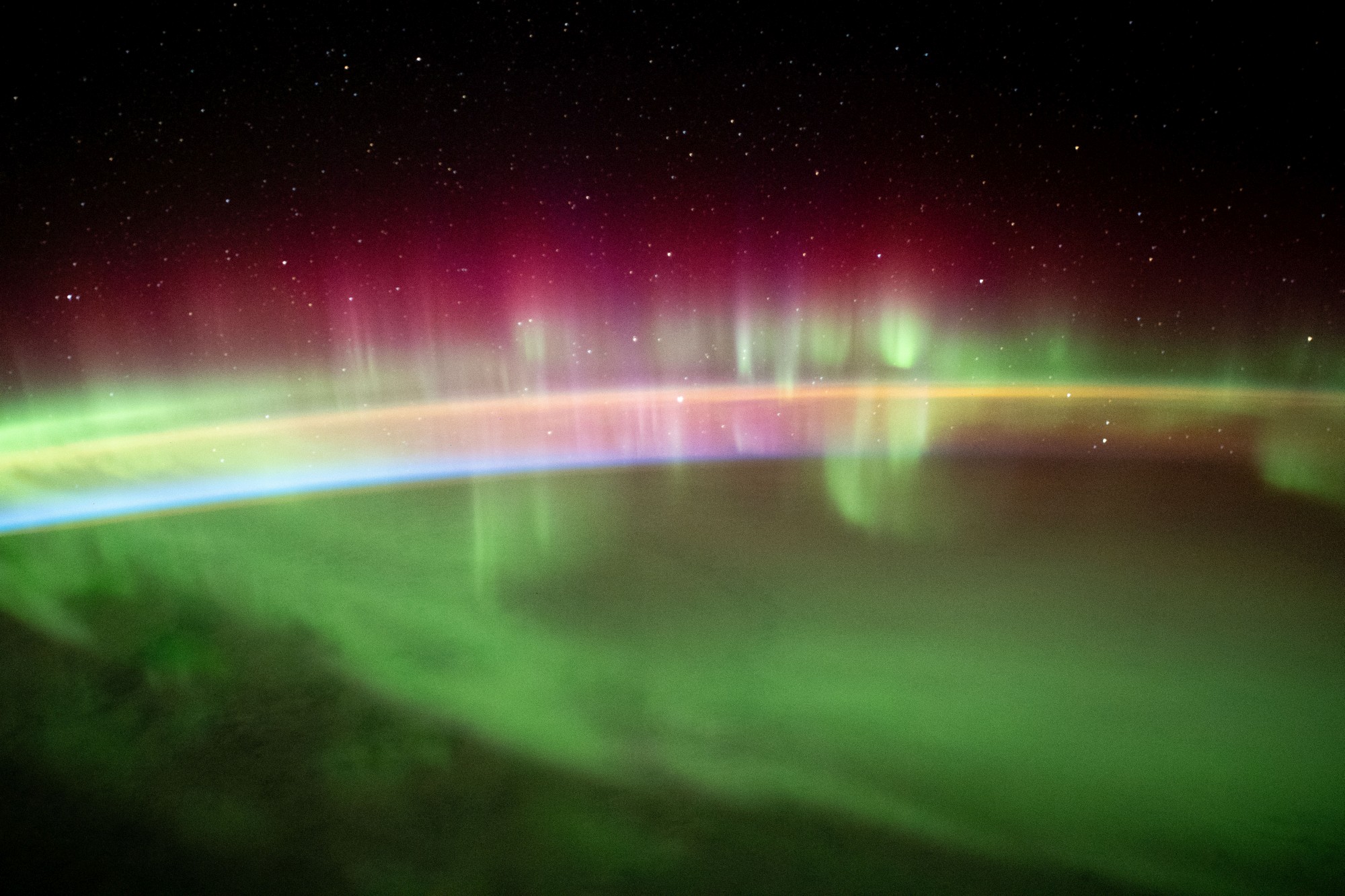
Expedition 46 flight engineer Tim Peake of the European Space Agency (ESA) shared a stunning image of a glowing aurora taken on Feb. 23, 2016, from the ISS. “The @Space_Station just passed straight through a thick green fog of #aurora…eerie but very beautiful.” Image credit: NASA
On September 17, 2011, the International Space Station provided a view of enchanting auroral beads. NASA actively investigates auroras, as they serve as visible indicators of space weather phenomena occurring around the Earth. Image credit NASA
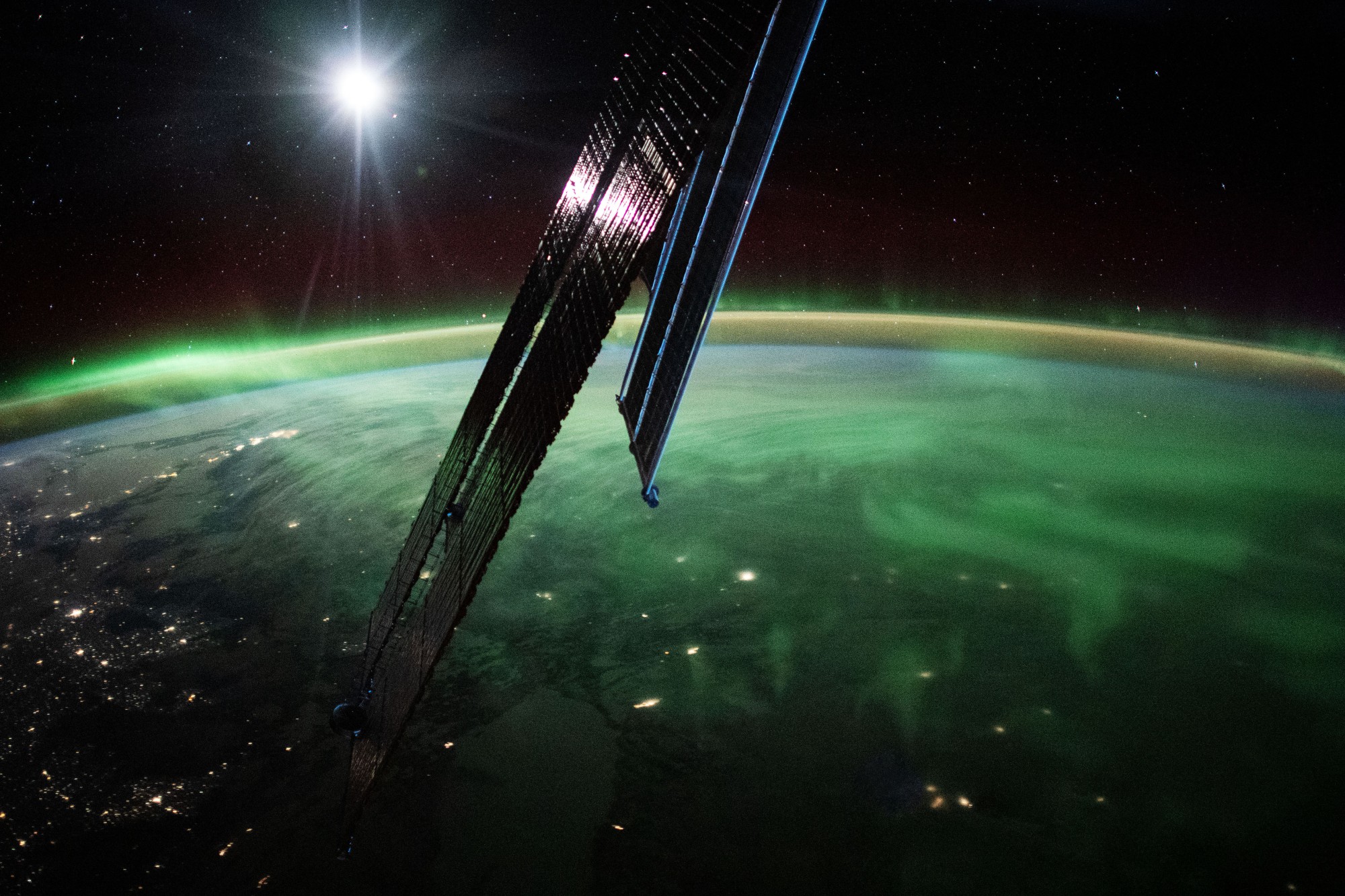
European Space Agency astronaut Thomas Pesquet snapped a photo of this breathtaking aurora from the ISS on on August 20, 2021. “Another aurora but this one is special as it is so bright,” European Space Agency astronaut Thomas Pesquet wrote on Instagram and Twitter. “It is the full Moon lighting up the shadow side of Earth almost like daylight.” Image credit: Thomas Pesquet/ESA/NASA
The ISS was orbiting 269 miles above the Indian Ocean southwest of Australia when this nighttime photograph was taken of the aurora australis, or “southern lights.” Image credit: NASA
On June 26, 2017, Jack Fischer, a Flight Engineer from NASA’s Expedition 52, delightedly shared a collection of photographs and a captivating time-lapse video showcasing a luminous green aurora. These stunning visuals were captured from his remarkable perspective aboard the ISS, situated approximately 250 miles above the Earth’s surface. Image credit: NASA
NASA astronaut Scott Kelly and ESA astronaut Tim Peake shared a series of aurora photographs taken from the ISS on January 20, 2016. Kelly wrote, “#goodmorning #aurora and the Pacific Northwest! #YearInSpace” and Peakefollowed up with, “Getting a photo masterclass from @StationCDRKelly – magical #aurora”. Image credit: NASA
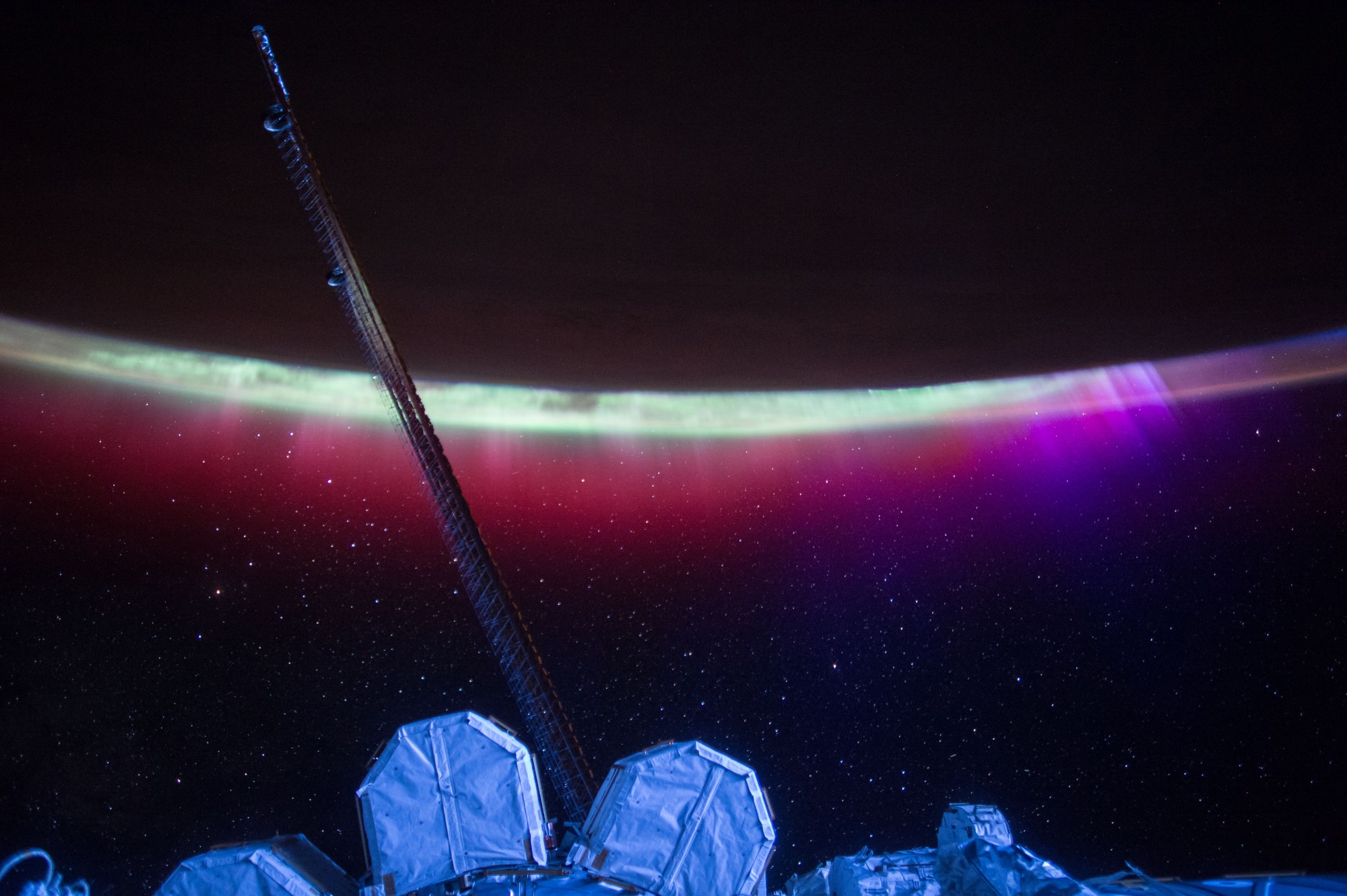
NASA astronaut Scott Kelly shared this photograph on social media, taken from the ISS on August 15, 2015. Kelly wrote, “#Aurora trailing a colorful veil over Earth this morning. Good morning from @space_station! #YearInSpace”. Image credit: NASA
How do auroras form? They are the result of a rather complex process. The Sun unceasingly generates a stream of charged particles known as the solar wind, which emanates outward into the vast expanse of the solar system. Upon encountering Earth’s magnetic field, the solar wind can trigger a phenomenon called magnetic reconnection. This explosive process facilitates the acceleration of charged particles from space into the Earth’s atmosphere.
The magnetosphere, Earth’s teardrop-shaped magnetic field, undergoes constant oscillations in response to the ever-changing intensity of the solar wind. As the solar wind particles flow around the magnetosphere, they gradually accumulate in its elongated tail, becoming trapped within it. During episodes of magnetic reconnection, these particles undergo acceleration towards the Earth’s poles. Along their journey, they collide with atoms and molecules in the upper atmosphere, initiating an interaction that imparts additional energy to the atoms. This surplus energy is subsequently released as a dazzling burst of light. These interactions persist at progressively lower altitudes until all the incoming energy is dissipated. When we observe the luminous aurora, we are witnessing an extraordinary spectacle comprised of billions of individual collisions that illuminate the magnetic field lines encircling the Earth.
Scientists employ various perspectives to study auroras, encompassing observations from below, above, and within. Ground-based telescopes and radar are utilized to look skyward and monitor the celestial occurrences. NASA missions like THEMIS investigate the factors behind the striking transformations of auroras, from gentle undulating waves of light to vibrant and dynamic streaks of color. To gather data from within an aurora in real-time, NASA employs sounding rockets. These rockets embark on brief space voyages lasting 5 to 20 minutes, venturing directly into the heart of auroras. Additionally, NASA actively supports the citizen science program Aurorasaurus, engaging people worldwide to contribute in tracking and observing auroras.
Through the study of auroras and their temporal variations, scientists gain valuable insights into the reactions of our planet’s magnetosphere to space weather in its vicinity.
A sociologist and English major by degree, I've worked in the area of civil society & human rights and have been blogging in the fields of travel, nature & science for over 20 years.
Check out my other project (especially if you're planning to visit Budapest soon) 👇



 Donate


Related Posts
The Best View of the Distant Universe Ever Captured Shows Galaxies From Over 13 Billion Years Ago
Mesmerizing Timelapse Reveals Jupiter’s Cloud Belts Moving at Different Speeds and Directions
First Images from Titan: The Only Photos Ever Taken from the Surface of Another Moon
What Is This Strange Square on Mars Everybody’s Talking About, and Are There Other Man-Made Looking Structures?
The Himalayas from Space: Stunning Views of Earth’s Tallest Peaks Like You’ve Never Seen Before
Chirstmas Tree and Christmas Lights: NASA Space Telescopes Show What the Festive Season Looks Like in Space
The Day Siberia Was Set Ablaze: The Mysterious Tunguska Event and How Close We’ve Gotten to Explaining It
Kreidesee: The Former Quarry Turned Into a Divers’ Paradise With All the Equipment Still Visible
Apollo Astronauts Left Bags of Poop on the Moon and We Need to Get Them Back
The Most Beautiful Meteorite Ever Found? The Cosmic Appeal of the Fukang Pallasite