We know it as the “Red Planet” for its rusty color, which is a result of the high iron content in its soil. But Mars is no different from Earth inasmuch as it has polar regions and active weather patterns in its thin atmosphere. This infrared image of the surface of Mars recently released by NASA was captured by their Mars Odyssey Orbiter and shows these forces at work.

The image was released as part of NASA’s celebrations for the 20th anniversary of Mars Odyssey orbiter, the longest-working Mars spacecraft in history. The image shows rolling blue and gold dunes – a side of the planet rarely seen. Sculpted by the wind into long lines, this sea of dark dunes surrounds Mars’ northern polar cap and covers an area as big as Texas. The image itself covers an area 19 miles (30 kilometers) wide.
This scene combines images taken during the period from December 2002 to November 2004 by the Thermal Emission Imaging System (THEMIS) on Odyssey. The camera captures the changing temperatures of Mars’ surface, providing valuable information regarding the planet’s composition and surface features.
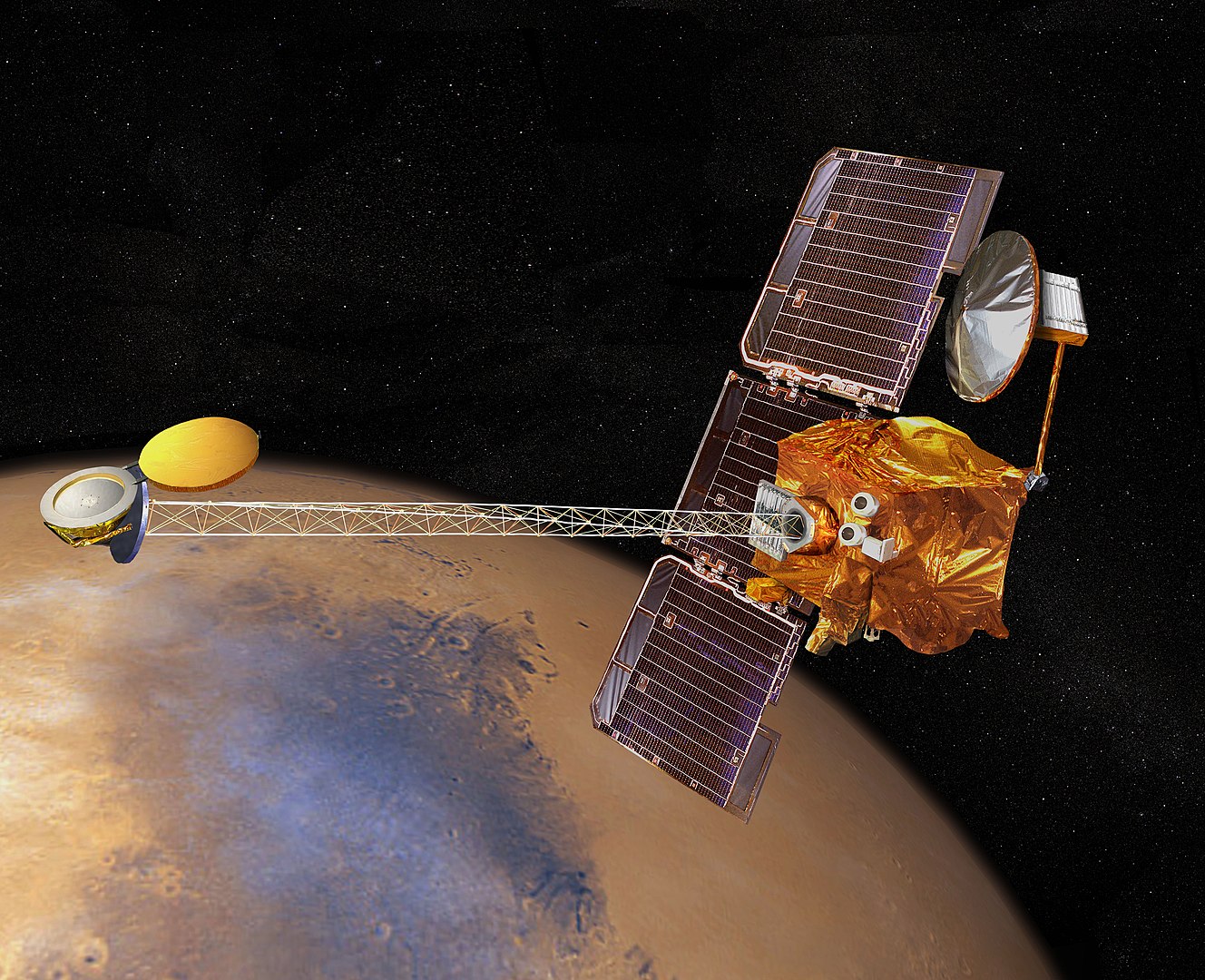
The Mars Odyssey spacecraft was launched from Cape Canaveral Air Force Station in Florida on April 7, 2001, and is still circling the Red Planet today.
 Donate


Related Posts
The Best View of the Distant Universe Ever Captured Shows Galaxies From Over 13 Billion Years Ago
Mesmerizing Timelapse Reveals Jupiter’s Cloud Belts Moving at Different Speeds and Directions
First Images from Titan: The Only Photos Ever Taken from the Surface of Another Moon
What Is This Strange Square on Mars Everybody’s Talking About, and Are There Other Man-Made Looking Structures?
The Himalayas from Space: Stunning Views of Earth’s Tallest Peaks Like You’ve Never Seen Before
Chirstmas Tree and Christmas Lights: NASA Space Telescopes Show What the Festive Season Looks Like in Space
The Day Siberia Was Set Ablaze: The Mysterious Tunguska Event and How Close We’ve Gotten to Explaining It
Apollo Astronauts Left Bags of Poop on the Moon and We Need to Get Them Back
The Most Beautiful Meteorite Ever Found? The Cosmic Appeal of the Fukang Pallasite
The Wow! Signal: When We Got an Extraterrestrial Message From Space