Male storms exist. Testicle formation is a serious thing. Apparently, Mt. Augustine in Alaska can send you giant balls. Just look at this.

The ash clouds from the 23 January 1976 eruption of Mt. St. Augustine in Alaska (called by some as the the scrotum of the gods) drifted over Arizona on 25 January at an altitude of 6 kilometers as deduced from air trajectories and the observation of an unusual cloud formation.
Apparently, these were ash-filled versions of the rare mammatus clouds – cellular patterns of pouches hanging underneath the base of a cloud, usually a cumulonimbus raincloud. So they were an even rarer display of an already rare phenomenon, probably never caught on camera at any other time.

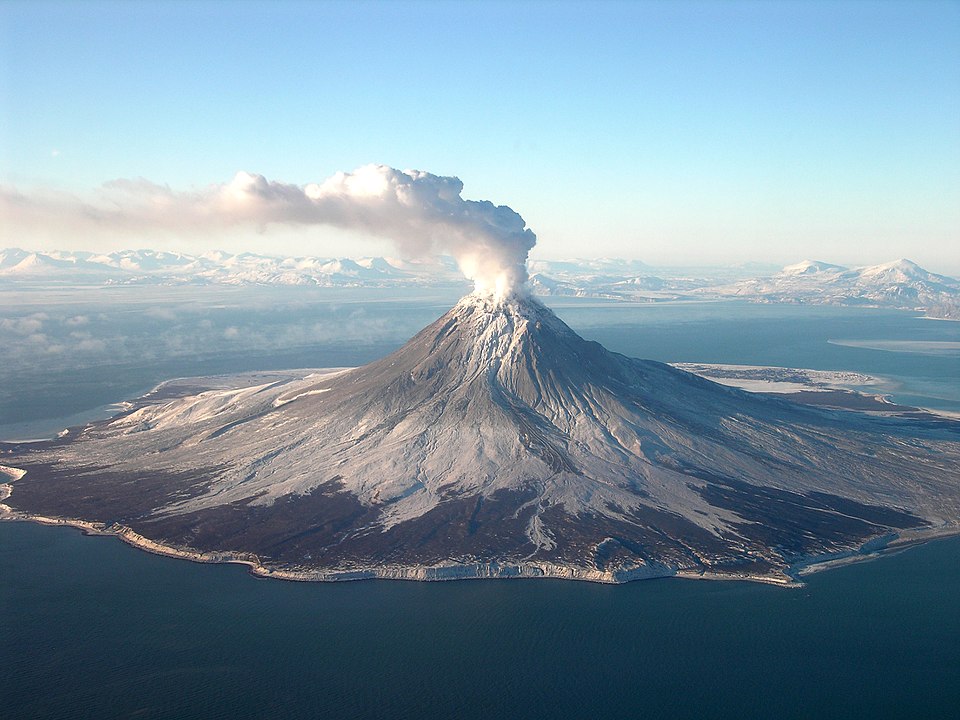
Augustine Volcano, also known as Utakineq in Sugpiaq and Chu Nula in Dena’ina, is located in Alaska and is composed of a central complex made up of summit lava domes and flows that are surrounded by an apron of ash deposits, pyroclastic material, lahars, and avalanches.
The volcano is known to be frequently active, and significant eruptions have been documented in 1883, 1935, 1963–64, 1976, 1986, and 2006.
Recently, I got lucky and photographed some amazing mammatus clouds myself – without the ash filling – over Tapolca, Hungary.

You can read the full story/see more incredible mammatus clouds over Hungary here.
 Donate


Related Posts
Island in an Island: Krenitsyna Volcano’s Unusual Geography and Amazing Symmetry
Mount Erebus of Antarctica Rains Tiny Gold Particles—The Only Volcano Known to Do So
Mount Etna Blows Rings Like an Able Smoker and We’ve Just Found Out What They Are and How They Form
Volcano Eruptions Look Incredibly Amazing From Space – Here Are the Best Images
Diamond Head: Hawaii’s Iconic Volcanic Jewel
Volcano in Hawaii Erupts Into a Smile and Here’s the Science Behind It
Drone Captures Volcanic Eruption From Above in Breathtaking Footage
This Is Not a Bird’s Nest But Volcanic Lava Called Pele’s Hair & Tears
Scientists Discover the Largest Volcano on Earth – It Has Even Caused Its Crust to Sink
Honeybees Survived Under Volcano Ash for Months During Canary Islands Eruption That Destroyed Everything in its Path